
Scalp Burning After Hair Color? Stop, Rinse, and Get Help
On this page
- Quick answer
- Speak up and stop the service
- Recognize an emergency reaction
- Rinse the product as directed
- Document symptoms and products
- Avoid reapplying or neutralizing at home
- Contact a healthcare professional
- Follow up with the salon
- Report a cosmetic reaction when appropriate
- Plan future hair services cautiously
Quick answer
Burning, intense stinging, itching, redness, swelling, rash, blistering, or eye irritation during or after hair color is not a sensation to “push through.” Tell the stylist immediately, stop the product exposure, and rinse the scalp thoroughly with water according to the product instructions. Do not add another chemical to neutralize it.
Call emergency services for trouble breathing, throat tightness, facial or tongue swelling, faintness, widespread hives, wheezing, or rapidly worsening symptoms. For a non-emergency reaction, contact a healthcare professional or dermatologist, save the product and ingredient information, and avoid the suspected products until a clinician advises you.

Speak up and stop the service
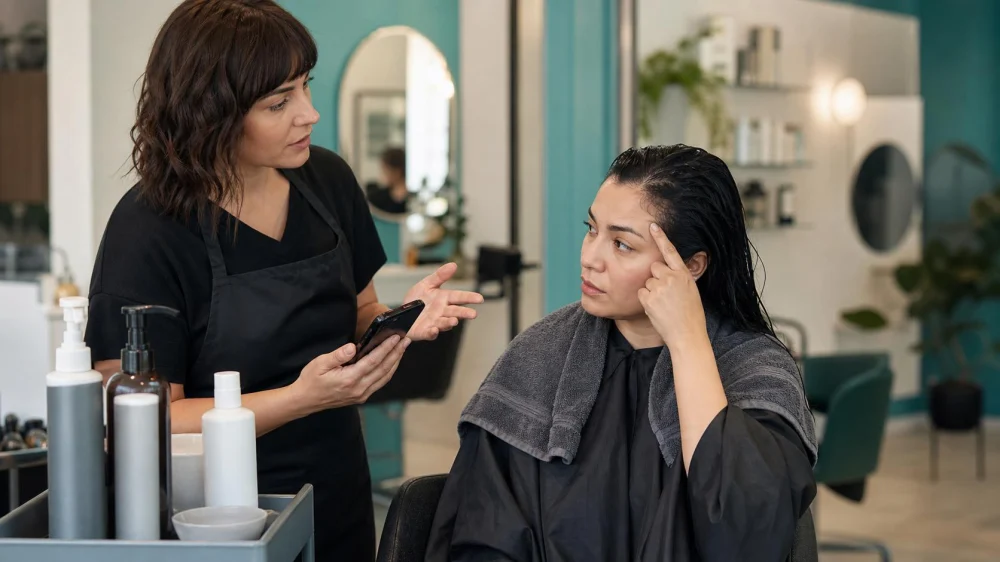
Describe the sensation and location as soon as it begins. Say whether it is mild tingling, increasing heat, sharp burning, itching, eye exposure, or breathing discomfort. The stylist should stop the timer, avoid applying more product, and follow the manufacturer’s removal and first-aid directions.
Do not let embarrassment, a special event, or fear of an unfinished result override symptoms. A reaction can worsen after exposure ends. Ask another person to stay with you and arrange transportation if you feel faint, have visual symptoms, or receive medication that affects alertness.

Recognize an emergency reaction
Call 911 for difficulty breathing or swallowing, swelling of the lips, tongue, face, eyelids, or throat, chest tightness, wheezing, confusion, fainting, weak rapid pulse, or widespread hives with other symptoms. These can signal a severe allergic reaction. Use prescribed epinephrine immediately as directed and do not wait to see whether symptoms pass.
For eye exposure, begin rinsing as the product label directs and contact Poison Control at 1-800-222-1222 in the United States or emergency care for severe pain, vision change, or inability to open the eye. Bring the label. Do not apply another salon product to the eye.
Rinse the product as directed
The FDA’s hair dye safety guidance advises rinsing the scalp well with water after dye use and contacting a healthcare provider after a reaction. Use comfortably cool or lukewarm water unless the label says otherwise, protect the eyes, and rinse long enough to remove visible product.
Do not scrub, scratch, brush, or use high-pressure water on irritated skin. Avoid very hot water and heat styling. If the product label gives specific first-aid steps, follow them and share them with the clinician or Poison Control.
Document symptoms and products
Note the service date, application and symptom times, areas treated, first symptom, progression, and actions taken. Photograph the scalp, hairline, ears, neck, eyelids, and other affected skin in consistent light without delaying care. Record previous use of the same or related products and any earlier itching or rash.
Ask the salon for the brand, product name, shade, developer strength, lightener, toner, additives, shampoo, conditioner, barrier product, gloves, and relevant Safety Data Sheets or ingredient lists. Save receipts, consultation notes, patch-test records, and lot numbers. Do not discard containers needed for medical or safety reporting.
Avoid reapplying or neutralizing at home
Do not reapply the color to “even it out,” place a darker dye over it, bleach again, use a relaxer or perm, or mix vinegar, baking soda, peroxide, essential oils, bleach, or another household substance on the scalp. Chemical combinations can worsen irritation, alter exposure, and make diagnosis harder.
Avoid fragranced styling products, tight hats, scratching, vigorous brushing, and heat until a clinician says they are appropriate. Do not use a topical steroid, antihistamine, antibiotic, or numbing product unless a healthcare professional or pharmacist confirms it fits your symptoms and medical history.
Contact a healthcare professional
Seek prompt advice for persistent burning, spreading rash, swelling, blisters, weeping skin, eye or facial involvement, fever, infection signs, hair loss, or symptoms that return after initially improving. A dermatologist can distinguish allergic contact dermatitis from irritant injury and other scalp conditions and may recommend formal patch testing.
The American Academy of Dermatology notes that redness, swelling, burning, itching, or rash after dye can indicate a reaction and advises stopping color and consulting a dermatologist. Bring the complete product list rather than guessing which ingredient caused it; people can become sensitized after previous uneventful exposures.
Follow up with the salon
Notify the salon manager in writing and request the service record and product details. State the facts and medical advice without asking the stylist to diagnose the condition. Ask the salon to preserve remaining product, lot information, mixing records, and incident notes according to its policy.
Discuss refunds or corrective styling only after health and scalp safety are addressed. A color correction may require additional chemicals and should not occur on irritated, sunburned, scratched, or damaged skin. Save all communication and any healthcare or product-replacement receipts.
Report a cosmetic reaction when appropriate
The FDA accepts reports of unexpected reactions to cosmetic products, including rash, redness, burns, hair loss, infection, or other illness. Healthcare comes first; reporting does not replace medical care or a salon complaint. Provide accurate product, lot, purchase, use, symptom, and treatment information without speculation.
Also report through the manufacturer’s verified consumer-safety channel and keep the case number. Severe workplace exposure may involve additional occupational reporting for the stylist. Do not post private medical records or unverified accusations publicly.
Plan future hair services cautiously
Do not use the same dye, black henna, related color, or assumed “PPD-free” substitute until a dermatologist or qualified clinician reviews the reaction and ingredients. Alternative dyes can contain different sensitizers, and “natural,” “organic,” or “hypoallergenic” wording does not guarantee safety.
Share confirmed allergies and the product list with every future salon. Follow product and clinician-directed skin testing each time; a prior negative test does not guarantee that a reaction cannot occur later. Consider non-chemical styling options while the scalp heals and seek medical advice before any return to color, bleach, relaxer, or perm.



 James Anthony4.0 (194 reviews)
 My Ambitious Beauty5.0 (5 reviews)
 Boom BomB beauty4.0 (20 reviews)
 Justin Hawkins Barber @ Rockstar Barbershop4.0 (15 reviews)
 Drybar - Lincoln Park4.0 (329 reviews)
 Four Seasons Barber Shop4.0 (69 reviews)
 How to Ask for a Haircut Near Me That Lets You Skip Daily Heat Styling
 How to Rebuild Damaged Hair Structure Naturally for Stronger, Healthier Hair
 How to Choose a Hair Salon Near Me That Offers Student or Senior Discounts
 Best Tips for Maintaining Vibrant Hair Color Longer Without Fading
 Best Hairstyles for 30-Somethings: Tips for a Youthful, Elegant Look
 How to Extend the Life of a Haircut Between Salon Visits Without Styling Overload