
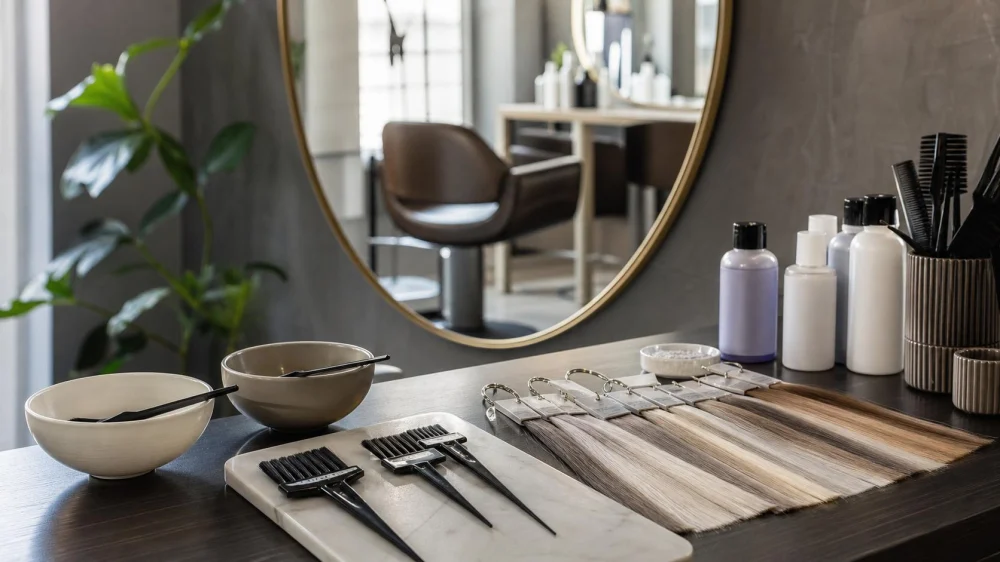
Hair Toner Appointment: Clarify Shade, Longevity, and Maintenance
On this page
Quick answer
Before a hair toner service, show the stylist your current hair in neutral light and describe the unwanted warmth or reflect you want adjusted. Confirm whether the product is a gloss, demi-permanent color, direct dye, or another formula; ask about expected shade, porosity, strand or allergy testing, processing, fade, and maintenance. Toner changes tone more reliably than underlying lightness, and porous sections may grab color differently. Approve a realistic target and a plan for correction before mixing.

Why it matters
The word toner covers different products and goals. Starting level, previous color, minerals, porosity, damage, and home care influence both the immediate result and how evenly it fades.
This United States salon guide is general. Product directions, licensing rules, allergy warnings, formula chemistry, hair condition, water quality, and individual results vary. Follow the manufacturer's instructions and salon assessment.

Practical checklist
- Bring daylight photos of the current color and desired tonal family.
- List bleach, color, henna, smoothing, metal-salt, pool, and well-water history.
- Identify allergies, scalp irritation, pregnancy concerns, and previous reactions.
- Ask which product category, developer, shade family, and processing approach will be used.
- Confirm strand and skin testing according to product directions.
- Discuss root, midlength, end, and extension differences.
- Get price, timing, maintenance, fade, and correction limits.
Step-by-step plan
- Assess clean dry hair in neutral and natural light before choosing a formula.
- Separate the request into lightness, warmth, depth, shine, and blending goals.
- Use required tests and do not apply over irritated or broken scalp.
- Protect clothing and skin, mix precisely, and apply using the product's professional directions.
- Monitor porous or previously lightened areas instead of assuming one processing time fits all.
- Rinse and finish as directed, then compare the result in more than one light source.
- Record the formula and schedule maintenance based on observed fade rather than a fixed promise.
Save starting photos, color and chemical history, products and batch details where available, formula, developer, processing by zone, tests, finish photos, aftercare, reaction, and next-step plan.
Limits and warning signs
Toner cannot safely lift every dark band, repair structural damage, or guarantee a camera-filter result. Purple or blue home products can shift tone but may stain porous hair or create uneven buildup.
Stop application for burning, swelling, hives, breathing symptoms, or significant scalp pain and follow emergency guidance for severe allergy. Seek corrective professional assessment for breakage, unexpected darkening, green or violet cast, or uneven grab.
Frequently asked questions
Will toner make hair lighter?
Usually its main job is changing tone; actual lifting depends on the product and starting hair.
How long will toner last?
It varies with formula, porosity, washing, heat, sun, water, and products, so ask for a range rather than a guarantee.
Why are my ends darker?
Porous ends may absorb color differently; zoned application and testing can reduce surprises.
Can I use purple shampoo every wash?
Follow the stylist and product directions; frequent use may dry hair or create unwanted buildup on porous sections.
Sources and evidence
The guide applies professional color consultation, cosmetic testing, chemical-history, porosity, manufacturer-direction, and recordkeeping principles: define the tonal target, disclose prior services, test when required, process by zone, and document the formula.
Conclusion and next steps
Show the starting color in neutral light, separate tone from lightness, disclose full chemical history, confirm product and tests, approve realistic fade and maintenance, and save the formula and finish photos.
 Semper Laser4.0 (230 reviews)
 Chicago Clippers Barbershop4.0 (67 reviews)
 All star Fadez barber shop4.0 (66 reviews)
 Diva's Africain Hair Braiding Studio4.0 (25 reviews)
 Gertrude Hair Braiding3.0 (8 reviews)
 Maggie’s African art gallery5.0 (3 reviews)
 How to Use a Hair Store Near Me to Build a Minimalist Travel Hair Kit Under $100
 Best Ways to Maintain Healthy Hair Through Seasons
 Clip-In Hair Extensions: Place, Blend, Remove, and Store
 Hair Salon Near Me vs. Home Haircut Kits: Pros and Cons
 How to Prepare for a Haircut After a Year of No Cuts
 How to Find a Hair Salon Near Me That Offers Credit or Payment Plans for Premium Services