
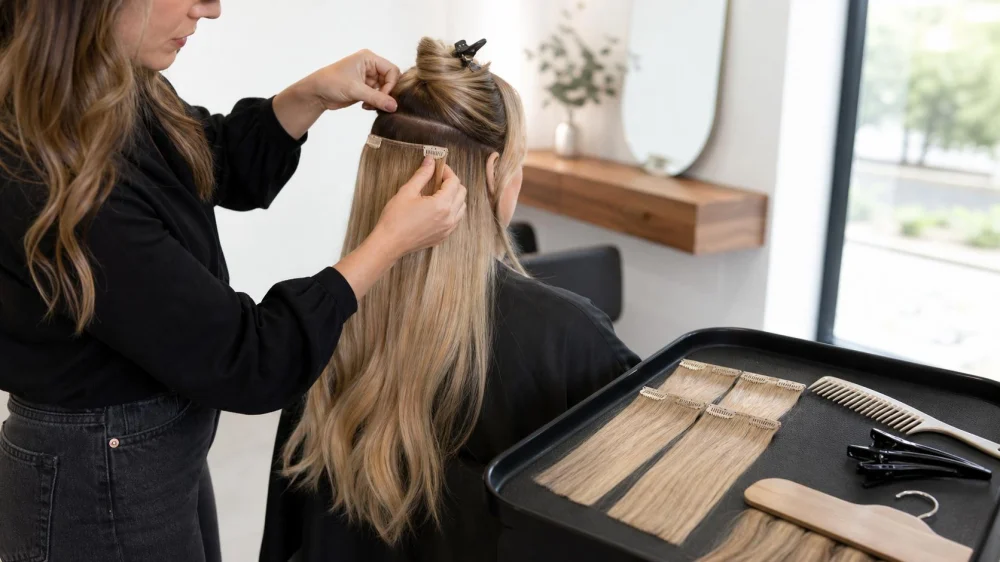
Clip-In Hair Extensions: Place, Blend, Remove, and Store
On this page
Quick answer
Clip-in extensions are temporary wefts secured with small snap clips. Match colour, texture, length, and weight; attach to clean, dry sections below visible part lines; and stop if clips pull, pinch, or cause headache. Open every clip before removal, support the root, detangle from ends upward, and store the clean, fully dry wefts flat or hanging as the maker directs.
Choose the right set
Decide whether the goal is fullness, length, colour accents, or a special-event style. More grams and longer wefts add weight, which is not ideal for every scalp or hair density. Fine, fragile, thinning, or recently processed hair may need fewer, lighter pieces or a different styling plan.
Compare the extensions in natural and indoor light. A single colour can look flat against dimensional hair, so a blended set may match better. Human hair and synthetic fibre have different washing, heat, colour, and product limits. Read the fibre and manufacturer instructions before buying or styling.
Prepare hair and wefts
Start with a dry scalp and detangled hair. Heavy oil or slippery product at the roots can reduce grip, while stiff buildup can make sectioning uncomfortable. Inspect each clip for sharp edges, broken teeth, weak stitching, exposed metal, and tangles. Retire a damaged piece instead of pinning it more tightly.
Lay the set in installation order and identify which weft fits each area. Measure against the head without clipping first. Keep pieces away from the hairline, ears, tender spots, and very sparse sections. A stylist can trim or blend a set, but confirm whether cutting affects return or warranty terms.
Place clips without excess tension
Create a clean horizontal section and clip the upper hair out of the way. Position the centre clip first on some wide wefts, then the outer clips, following the product instructions. Each clip should close on enough hair to feel stable without scraping the scalp. Do not attach multiple heavy pieces to the same narrow row.
After each weft, move the head gently and check comfort. Pressure that seems minor at first can become painful over hours. Stop and reposition for pulling, stinging, numbness, headache, or visible scalp stress. Backcombing may add grip but also creates friction and removal difficulty; use it only when suitable and minimal.
Blend and style
Release a layer of natural hair over each weft and check from the sides, back, and while moving. Leave enough coverage near the crown and part. Use a mirror or photograph to find exposed clips. If a weft shows, move it lower or select a narrower piece rather than piling more hair over an uncomfortable placement.
Match styling tools to the fibre’s verified heat limit. Use heat protectant when appropriate for the hair and product, and keep hot tools away from clips, stitching, and the scalp. Style natural hair and extensions in small sections so the textures blend. Do not colour synthetic or human-hair pieces unless the maker and a qualified colourist approve.
Remove in the right order
Take extensions out before sleeping, bathing, swimming, vigorous exercise, or any activity the maker excludes. Separate the covering hair, support the weft with one hand, and open every clip completely. Lift it away from the root without sliding or pulling through the hair.
Remove upper pieces first so they do not tangle with lower rows. If hair catches, stop, expose the clip, and detangle gently rather than yanking. Count every weft and inspect the scalp. Persistent soreness, broken hairs, redness, bumps, or hair loss deserves a pause and professional evaluation.
Clean and store
Brush each removed weft from ends upward while holding near the seam. Clean only as often and by the method the manufacturer recommends. Keep clips closed or open according to the storage design, protect metal from prolonged soaking, and rinse products thoroughly. Do not use household glue on loose stitching.
Dry fully before storage. Wet extensions sealed in a bag can develop odour, tangling, or material damage. Store flat in a smooth case or hang from a suitable extension hanger away from sunlight, humidity, pets, and snagging objects. Label colour or set without attaching adhesive to the fibre.
Frequently asked questions
Can I sleep in clip-in extensions?
Generally remove temporary clip-ins before sleep unless the manufacturer explicitly states otherwise. Sleeping adds friction, tangling, clip pressure, and scalp tension.
Why do my clips show?
The weft may be too high, wide, heavy, or close to a sparse part. Reposition lower, use a smaller piece, or ask a stylist to create a coverage map.
Can clip-ins damage hair?
Damage risk rises with excessive weight, repeated placement on the same hairs, rough removal, sleeping, tangles, and scalp discomfort. Lighter sets, rotation, and careful removal reduce strain but cannot eliminate all risk.
Evidence and limitations
This guide reflects common temporary-extension and salon handling practice: fit weight to hair density, avoid tension and tender areas, respect fibre heat limits, remove before sleep, and detangle with support. Products and scalps vary. Manufacturer instructions and an experienced stylist should guide a specific set; a clinician should assess pain, inflammation, or hair loss.
Conclusion and next steps
Choose a lightweight match, inspect every clip, and map rows before attaching. Check comfort and visibility as you build the style. At the end of wear, open clips fully, support roots, detangle each piece, and store it clean and dry so temporary length does not become long-term tension.




 A.S. African Hair Braiding shop4.0 (46 reviews)
 The Waxing Room4.0 (56 reviews)
 Hair by Galina MG4.0 (15 reviews)
 Frank's Barbershop5.0 (21 reviews)
 Haley's African Hair Braiding4.0 (142 reviews)
 YM Salon5.0 (3 reviews)
 The Best Haircut Ideas Near Me for Fine Straight Hair That Want Volume Without Layers
 How to Choose the Best Hair Stylist for Your Hair Type
 The Best Hair Cuts Near Me for Women Over 50 Who Still Want Trendy Styles
 How to Use a Hair Store Near Me to Build a Travel-Friendly Hair Kit
 Hair Color Looks Different Indoors? Check the Light Before a Correction
 How to Find a Hair Store Near Me That Offers Kits for At-Home Haircut Maintenance