
Hair Color Looks Different Indoors? Check the Light Before a Correction
On this page
- Quick answer
- Why hair color shifts with lighting
- Evaluate fully dry hair
- Use a three-light check
- Take useful, unfiltered photos
- Inspect sections, not one mirror view
- Separate tone from application concerns
- Compare the result with the consultation
- Contact the salon with specific details
- Protect hair before any correction
Quick answer
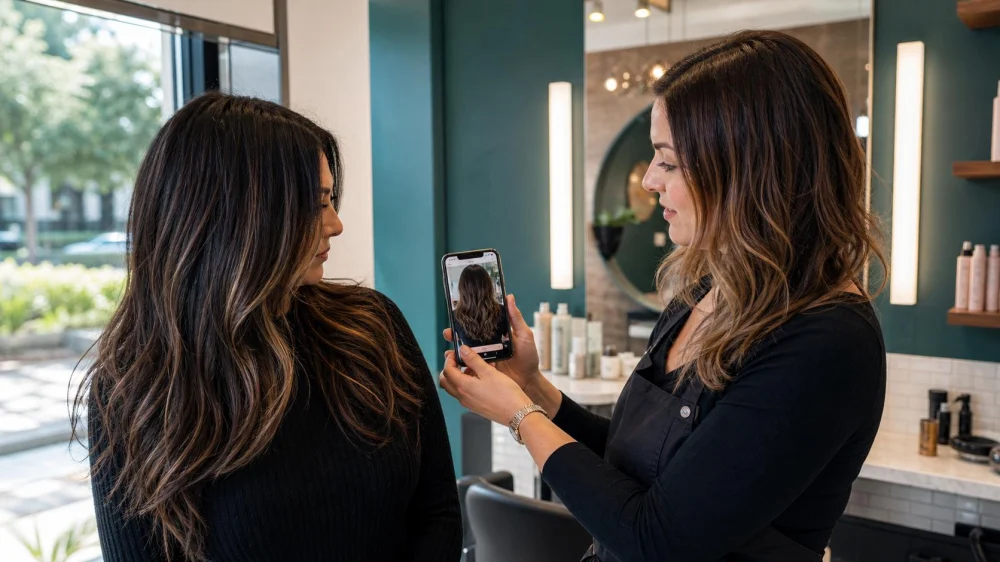
Hair color can look warmer, cooler, darker, flatter, or more reflective under different bulbs and at different times of day. Before requesting a correction, view fully dry hair in indirect daylight, a neutral indoor light, and the lighting where you normally see it. Photograph the same sections without a filter, beauty mode, or automatic color effect.
If the concern appears only under one very warm or cool bulb, lighting may be the main cause. If you see consistent bands, missed areas, an unexpected root line, uneven saturation, or a tone that differs from the agreed reference across several lights, contact the salon promptly. Do not apply box dye, bleach, toner, or a clarifying treatment before the stylist assesses it.

Why hair color shifts with lighting
Every light source has a color quality. Warm household bulbs emphasize gold, copper, and red; cool bulbs can make ash tones more visible; dim light hides dimension; strong overhead light can create glare. Daylight also changes with cloud cover, shade, time, window tint, and nearby colored walls.
Hair is reflective and directional. Smooth straight strands may produce bright highlights, while curls and textured surfaces break reflection into smaller areas. Dark hair can look nearly solid away from light, then reveal warmth and variation near a window. These optical effects do not change the pigment, but they change what the eye and camera record.
Evaluate fully dry hair
Wet hair commonly looks darker, cooler, and more compact. Product, salon cape shadows, wet sections, and a different blowout can also alter the first impression. Let the hair dry in the finish agreed with the stylist before judging depth, tone, placement, and contrast.
Do not postpone reporting a scalp reaction, breakage, or a clearly wrong service while waiting for styling. Color appearance can be evaluated after drying; burning, rash, swelling, hair snapping, or chemical injury needs immediate salon and healthcare attention.
Use a three-light check
- Stand near a window in bright indirect daylight, not direct sun.
- Check under a neutral white indoor light with surrounding colored lamps off.
- Check in the warm or cool room where the color usually concerns you.
Keep clothing, background, hairstyle, and parting similar. Look from front, sides, back, crown, and underneath. Do not compare direct sunlight with a dark bathroom and treat the difference as proof of a formulation error.
Take useful, unfiltered photos
Clean the camera lens, turn off filters, portrait color effects, night mode, and beauty adjustments, and use the standard camera when possible. Include one full-head view and close views of the specific concern. Hold a neutral gray, white, or black object in frame to help the salon understand the lighting, while recognizing that phone processing can still shift color.
Photograph the same section in each light instead of using unrelated angles. Save the original files and note the room, bulb type if known, and time. Screens differ too, so photos support—but do not replace—an in-person color assessment.
Inspect sections, not one mirror view
Part the hair as you normally wear it, then gently lift top layers to view the crown, temples, hairline, nape, and interior. Ask another person to photograph the back without pulling or brushing aggressively. Compare corresponding sections on both sides while allowing for intentional asymmetry.
Look for repeated patterns: a horizontal band, isolated dark patch, missing highlight, concentrated warmth, root overlap, or ends that differ from the planned gradient. A single bright strand may be reflection; a line that persists across angles and lights deserves salon review.
Separate tone from application concerns
A tone concern is about warmth, coolness, brightness, or depth across otherwise even color. An application concern may involve banding, spotting, missed coverage, uneven lift, bleeding foils, or an unexpected line. Placement concerns relate to highlight size, face framing, root shadow, contrast, or blend.
Describe what you see without diagnosing the chemical cause. “The left temple has a dark patch in all three lights” gives the stylist more usable information than “the toner failed.” A stylist needs the formula, hair history, processing notes, and direct examination to identify the correction.
Compare the result with the consultation
Review the saved reference images, stylist notes, swatches, agreed maintenance level, budget, number of sessions, and discussion of underlying pigment. Reference photos may use studio light, editing, extensions, a different starting color, or a different texture. The goal should have been translated into realistic terms for your hair.
Identify the gap precisely: overall depth, warmth, brightness around the face, gray coverage, root blend, or placement. Also note what you like. A focused correction can preserve successful areas and reduce unnecessary chemical exposure.
Contact the salon with specific details
Contact the salon within its adjustment-policy window. Provide the service date, stylist, original goal, specific location of the concern, when it appears, and two or three consistent photos. Ask for an assessment appointment rather than demanding a specific chemical service by message.
Confirm whether the consultation and adjustment have a fee, which stylist will assess it, how long to reserve, and what not to do beforehand. Be honest about any shampoo, swimming, heat, home color, or other product used since the appointment.
Protect hair before any correction
Do not layer permanent dye, bleach, toner, color remover, purple or blue concentrate, baking soda, dish detergent, or repeated clarifying washes onto fresh color without professional advice. A quick home change can alter the evidence, cause banding, dry the hair, and limit safer salon options.
At the assessment, ask about strand testing, scalp condition, hair integrity, expected result, number of sessions, products, cost, and maintenance. Stop if the scalp is irritated or the hair shows concerning breakage. A well-documented consultation may conclude that lighting is the issue, that a small tonal adjustment is enough, or that the safest correction requires time.
 James Anthony4.0 (194 reviews)
 My Ambitious Beauty5.0 (5 reviews)
 Boom BomB beauty4.0 (20 reviews)
 Justin Hawkins Barber @ Rockstar Barbershop4.0 (15 reviews)
 Drybar - Lincoln Park4.0 (329 reviews)
 Four Seasons Barber Shop4.0 (69 reviews)
 How to Ask for a Haircut Near Me That Lets You Skip Daily Heat Styling
 How to Rebuild Damaged Hair Structure Naturally for Stronger, Healthier Hair
 How to Choose a Hair Salon Near Me That Offers Student or Senior Discounts
 Best Tips for Maintaining Vibrant Hair Color Longer Without Fading
 Best Hairstyles for 30-Somethings: Tips for a Youthful, Elegant Look
 How to Extend the Life of a Haircut Between Salon Visits Without Styling Overload