
Hairbrush Cleaning: Remove Hair, Product, and Moisture
On this page
Quick answer
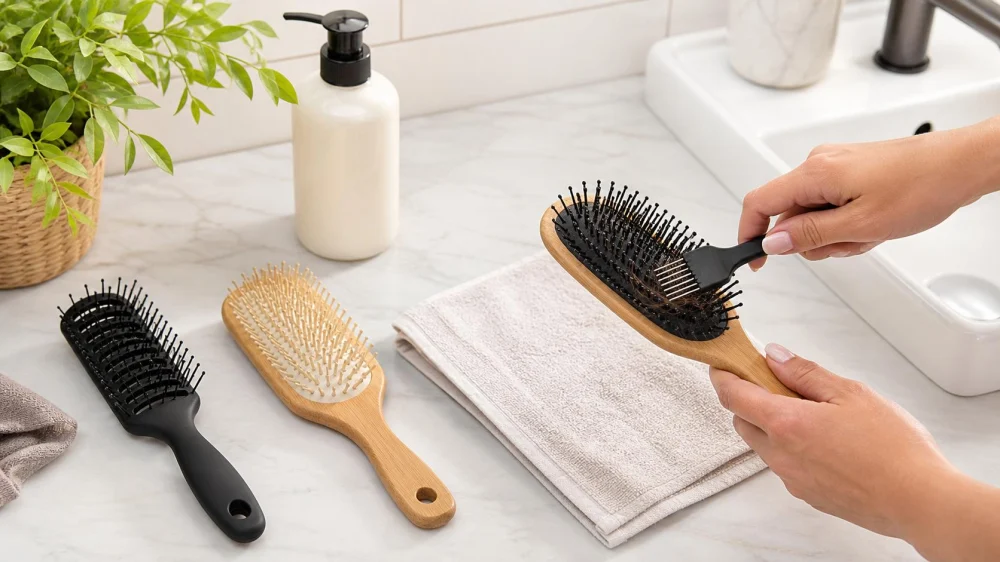
Clean a hairbrush by removing trapped hair first, checking the manufacturer's material instructions, and using only as much mild soap and water as the brush can tolerate. Do not soak wooden handles, cushioned bases, natural bristles, glued components, or vented tools with hidden cavities unless their instructions allow it. Rinse carefully, shake out water, and air-dry fully before use.
This guide covers personal hairbrushes and combs. Salon sanitation between clients follows professional rules and product-specific disinfectant instructions.
Identify brush materials
Look at the handle, base, bristles, pins, pad, adhesives, and any electronic or heated component. A solid molded plastic comb tolerates water differently from a wooden paddle brush or boar-bristle cushion brush.
- Solid plastic comb or brush: generally easiest to wash, but check rubber grips and glued inserts.
- Metal pins: durable when dried quickly, though the base can trap moisture and metal can corrode.
- Wood or bamboo: prolonged water exposure can swell, split, discolor, or loosen finish.
- Natural bristles: may need gentler cleaning and minimal soaking to protect bristles and base.
- Cushioned or pneumatic base: water can enter through the vent hole or pin openings.
- Electric or heated brush: unplug and follow the appliance manual; never immerse it.
If the brand and instructions are unknown, use the least-wet method that removes debris without saturating seams and cavities.
Dry-clean first
- Work over a towel in bright light.
- Pull loose strands from the brush perimeter with fingers.
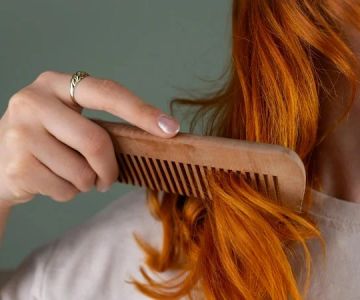
- Use a brush-cleaning rake or wide-tooth comb to lift hair from the base.
- Cut only the hair loops with small scissors, keeping blades away from bristles, pads, and your hands.
- Use tweezers for tightly wrapped strands around individual pins.
- Tap dry flakes and product crumbs onto the towel.
Do not yank a dense mat upward. That can pull pins from a cushion or bend bristles. Divide the hair into smaller sections and lift gradually.
Wash by brush type
Washable plastic tools: use lukewarm water and a small amount of mild soap. Agitate the teeth or bristles, scrub the base with a soft toothbrush reserved for cleaning, and rinse until residue is gone.
Wood and natural-bristle brushes: wipe the handle and base with a barely damp cloth. Clean bristle tips with controlled suds if the manufacturer permits, keeping water away from the wooden body and cushion. Do not leave them in a basin.
Cushioned brushes: hold the bristles downward and keep the vent opening out of water. Use a damp cloth or lightly loaded cleaning brush, then wipe away soap instead of flooding the pad.
Heated tools: unplug, cool completely, and follow the manual. Remove hair dry and wipe only the surfaces approved by the manufacturer. Never spray liquid directly into vents or controls.
Do not mix cleaning chemicals or apply a salon disinfectant to a material unless both the product label and tool manufacturer allow that use. More chemical is not automatically cleaner and can leave residue on hair or damage finishes.
Dry completely
Shake out removable water and blot with a clean towel. Position a washable plastic brush bristle-side down or sideways so water does not collect at the base. Place wood and natural-bristle brushes in a ventilated area away from direct heat and strong sun.
Do not use a high-heat dryer to speed the process. Heat can warp plastic, loosen adhesive, crack wood, or damage bristles. Wait until the pad, pin holes, handle seams, and vent are fully dry before returning the brush to a drawer.
Build a cleaning schedule
Remove loose hair frequently so product and lint do not form a compact mat. Set deeper cleaning by use: a daily styling brush used with dry shampoo, oils, sprays, or gels usually needs attention sooner than an occasional detangling comb.
Clean after a product spill and do not share personal brushes during a scalp infection or lice concern. Follow medical or public-health advice for the specific condition rather than relying on routine soap cleaning.
Store the dry brush away from toilet spray, damp shower areas, open makeup powders, and loose hair. A breathable drawer organizer or clean cup keeps bristles from touching dirty surfaces.
When to replace the brush
Replace a brush with sharp or missing pin tips, cracked teeth, a split handle, loose cushion, persistent odor, visible mold, rust, peeling finish, melted plastic, or an electrical defect. A dirty brush can be cleaned; a damaged surface that scratches the scalp cannot be restored safely with more washing.
Also replace the tool when bristles no longer perform the intended job and cause repeated snagging or breakage. Choose a design matched to hair density, curl pattern, wet or dry use, and styling purpose.
FAQ
Can I soak every plastic brush?
No. A plastic exterior may still hide a cushion, glue, hollow handle, rubber grip, or trapped-air cavity. Check construction first.
Can I put a hairbrush in the dishwasher?
Only if the manufacturer explicitly says so. Heat and detergent can warp parts and leave residue.
Why is there gray lint at the bristle base?
It can be a mixture of hair, fibers, shed skin, oil, dust, and styling product. Remove hair first, then clean the compatible surfaces.
Should family members share hairbrushes?
Personal brushes are easier to keep hygienic when not shared. Avoid sharing during any scalp or lice concern.
How can I clean a brush after hair oil?
Remove hair, then use a small amount of compatible mild cleanser. Repeat a controlled wipe or wash rather than soaking an unsuitable brush.
Next steps
Identify the brush materials, remove trapped hair with a rake or comb, and choose a controlled wash or wipe method. Dry the tool fully in moving air, then inspect tips, seams, and cushion before using it again.
Evidence note: This article summarizes material-care and hygiene principles. The brush or appliance manufacturer's instructions control cleaning and immersion.


 LA Luz Alvarenga Hair Salon4.0 (44 reviews)
 Dominique Deverreaux Natural Strandz5.0 (7 reviews)
 Clippers Inc Barber Shop4.0 (62 reviews)
 O Spa4.0 (75 reviews)
 Persnikkity Styles3.0 (3 reviews)
 NOVACHIS SALON5.0 (51 reviews)
 Why “Hair Store Near Me” Still Beats Online Shopping for Certain Texture Products
 The Best Haircut Products You Can Buy at a Hair Store Near Me That Work Immediately
 How to Use a Hair Store Near Me to Stock a Travel-Friendly Hair Kit for Weekend Getaways
 How to Style Shoulder Length Hair for Everyday Casual Look
 Best Hair Color for Pale Skin Tones That Brighten Your Look
 Gray Blending Consultation: Coverage, Contrast, and Upkeep