
Salon Tool Hygiene: What Clients Should Check Before Service
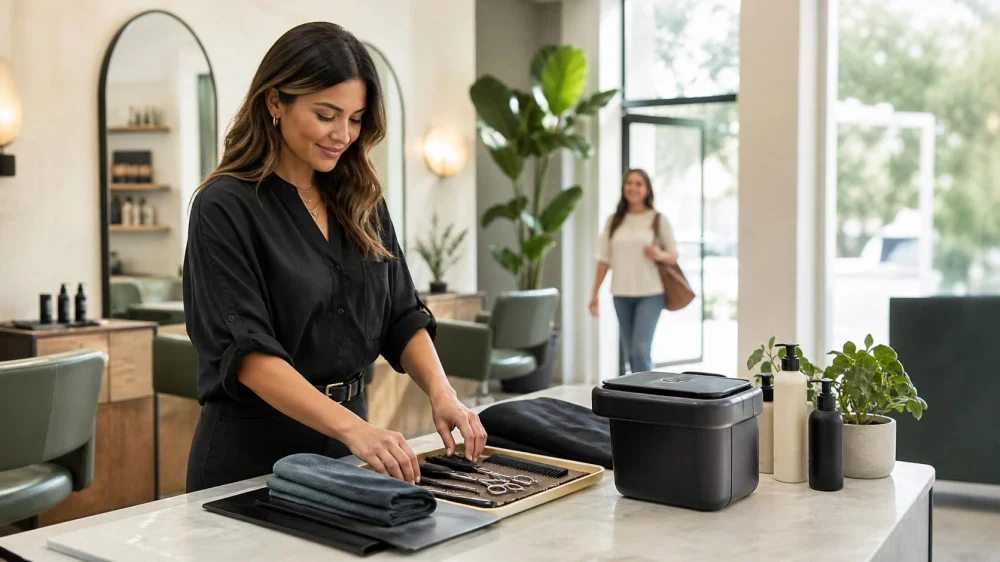
Good salon hygiene is visible in the workflow: used items are separated from clean ones, reusable tools are cleaned and disinfected as required, single-use items are discarded, linens are changed, hands are cleaned, and surfaces are reset between clients. You do not need to inspect the salon like an auditor. Observe the setup, ask a calm question when something is unclear, and postpone service if a tool is visibly soiled or safe handling cannot be explained.
In this guide
Cleaning Is Not the Same as Disinfection
Cleaning removes hair, product, and visible debris. Disinfection uses an appropriate product and contact process to reduce specified microorganisms on compatible nonporous items. A tool generally needs to be cleaned before it can be disinfected effectively. Sterilization is a different process and is not the routine term for every hair tool.
Exact requirements come from state cosmetology or barbering rules, product labels, tool instructions, and workplace procedures. Clients do not need to choose chemicals or direct staff. The useful question is whether the salon has a consistent separation, cleaning, disinfection, drying, and storage process.
Observe the Station on Arrival
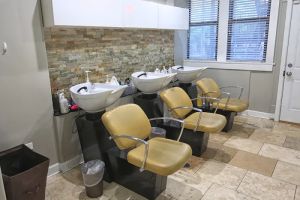
A ready station should not contain the prior client's hair, used towels, open food, or overflowing waste. Clean tools should be stored away from used items and splashes. Containers should be in good condition and used according to salon rules; a decorative jar does not prove that contents are clean.
Watch the transition between clients. The stylist should remove debris, handle used textiles appropriately, reset contacted surfaces, and clean hands when needed. Gloves do not replace hand hygiene and should be changed when contaminated or when moving between incompatible tasks.

Check Combs, Brushes, and Shears
Combs and brushes should be free of hair and visible buildup before they touch you. Reusable nonporous items should go through the required cleaning and disinfection process. Porous items can be difficult or impossible to disinfect adequately and may need to be single-use or managed under specific rules.
Shears and other implements should be visibly clean and handled so cleaned surfaces are not placed back in a contaminated area. If an item is dropped, it should be removed from service until processed appropriately. Do not touch sharp tools to inspect them.
Razors and blades require particular care. Single-use blades should be new for the client and discarded in the proper container. Reusable holders must be handled according to applicable rules and manufacturer directions. Ask the professional to explain the process rather than attempting to open or manipulate the device.
Review Electric Tools and Attachments
Clippers, trimmers, dryers, irons, and detachable guards or nozzles collect hair and product. Staff should remove debris and process compatible parts according to their instructions. Liquids should never be applied in a way that creates an electrical hazard or damages equipment.
Check cords, plugs, and tool housings for obvious damage. Hot tools should rest on a heat-safe surface and not contact used towels or flammable product. If a tool smells like burning insulation, sparks, or has an exposed wire, ask that it not be used.
Look at Capes, Towels, and Neck Barriers
A fresh towel should be used for each client. Reusable textiles should be laundered, dried, and stored to prevent contamination. Used linens belong in a designated container rather than on a clean worktop.
A cape should not place a previously used neck edge directly against the skin. Salons may use a clean cape, a fresh neck strip, a clean towel barrier, or another approved method. If the barrier shifts during service, ask for it to be reset rather than tolerating discomfort.
Check the Shampoo and Color Areas
Shampoo bowls, headrests, spray handles, and nearby surfaces should be reset between clients. Bottles should be closed and dispensed without contaminating the product. Staff should avoid returning unused product from a cup or bowl to the original container.
Color bowls, brushes, measuring tools, and reusable gloves require appropriate processing. Single-use applicators should not move between clients. Chemical services also require a separate consultation about scalp condition, product instructions, ventilation, allergy precautions, and prior chemical history; a clean tool does not make every product suitable for every person.
How to Raise a Concern
Use a specific, neutral question: “Could I please have a clean comb?” or “How is that attachment processed between clients?” This gives staff a chance to correct a simple oversight or explain the system. A professional response should be clear and unpressured.
Pause or leave if a visibly contaminated item is about to be used, a single-use item appears reused, staff dismiss a reasonable safety concern, or the environment presents an immediate hazard. Pay for completed authorized services according to applicable terms, document facts, and contact salon management or the relevant licensing agency if needed.
Client Hygiene Checklist
- Station reset and free of prior-client debris
- Clean and used tools clearly separated
- Combs and brushes free of hair and buildup
- Dropped tools removed from service
- Fresh towel and clean neck barrier provided
- Electric tools intact and safely placed
- Shampoo bowl and headrest reset
- Products dispensed without returning leftovers
- Single-use items opened or discarded appropriately
- Questions answered without pressure
Frequently Asked Questions
Can I ask a stylist to clean a tool again?
Yes. Ask politely and specifically. The stylist can replace or reprocess it according to salon procedure. Do not apply your own chemical to professional equipment.
Does a sealed pouch mean a tool is sterile?
Not necessarily. Packaging and terminology vary. Ask what process was used and what local rules require instead of assuming that appearance proves a particular level of processing.
Are wooden brushes safe?
Material, construction, condition, and intended use affect whether an item can be processed adequately. The salon should follow applicable rules and manufacturer instructions.
What if I have a scalp cut or infection?
Tell the professional before service and seek medical advice when appropriate. A stylist should not diagnose or treat a medical condition, and postponing service may be safest.
Where can I check sanitation rules?
Look for the current cosmetology or barbering regulator in your state. Requirements may differ by license type and service, so use official sources.
Salon hygiene is less about a spotless-looking room than a repeatable process between people and tasks. Observe, ask, and act on clear warning signs. Regulations and product directions vary, and this guide does not replace local rules, professional training, or medical advice for a skin or scalp concern.


 Renaissance Grooming0.0 (0 reviews)
 Hair Experts Bronzeville4.0 (99 reviews)
 So Pretty Hair Bar5.0 (2 reviews)
 Brows by Basia5.0 (46 reviews)
 Amen African Braids4.0 (137 reviews)
 Al's Barber Shop4.0 (34 reviews)
 How to Protect Hearing Aids During a Salon Appointment
 Best Haircut Styles for Wedding Guests, Bridesmaids & Mothers of the Bride
 How to Use a Haircut Near Me to Prep for a Big Life Change Without Losing Your Look
 The Best Hair Cuts Near Me for Women Over 50 Who Still Want Trendy Styles
 htmlCopy codeHow to Choose the Right Hair Salon Near Me Based on Your Hair Type, Budget & Location
 How to Choose a Haircut That Saves Time Every Morning – Easy Dry, Easy Style