
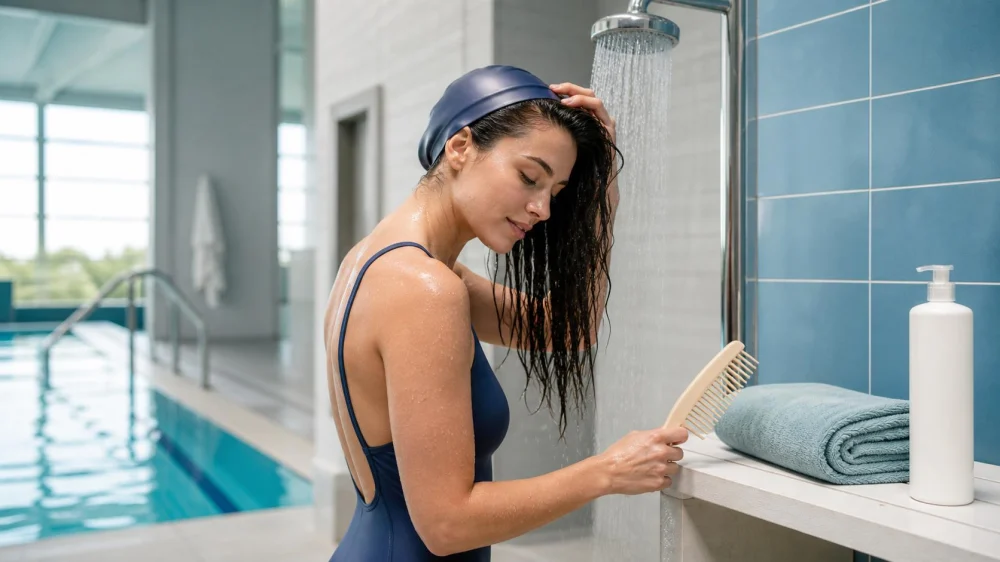
Swim Hair Care: Protect, Rinse, and Detangle Gently
Table of contents
- Quick answer
- Prepare before entering the water
- Use a swim cap realistically
- Rinse promptly after swimming
- Wash and condition for your hair
- Detangle without adding breakage
- Protect colored and light hair
- Watch the scalp
- Build a repeat-swimmer routine
- Swim hair-care checklist
- Limitations
- Frequently asked questions
- Sources and evidence notes
- Conclusion
Quick answer
Before swimming, wet hair with clean water and consider a leave-in conditioner or oil that suits your hair, then cover it with a well-fitted swim cap. After swimming, rinse promptly with fresh water. Cleanse as needed with a swimmer-focused or gentle shampoo, condition, blot rather than rub, and detangle according to hair texture. Stop and seek professional advice for persistent scalp burning, rash, sores, unusual shedding, or severe breakage.

Prepare before entering the water
Dry hair can take up pool or salt water quickly. Saturating it first with clean shower water may reduce how much treated water it absorbs. A small amount of compatible leave-in conditioner or oil can add a physical barrier, as recommended in American Academy of Dermatology swim-season guidance. Choose a product that does not make the pool deck slippery and follow facility rules.
Remove snag-prone clips and tight elastic bands. Secure long hair in a comfortable braid or low style that fits under a cap without pulling the hairline. Do not begin with a painful, extremely tight style; tension plus repeated cap removal can increase breakage. If the scalp has open skin or an active flare, ask a clinician whether swimming is appropriate.
Use a swim cap realistically
A swim cap helps reduce water exposure and keeps hair controlled, but it is not a perfectly watertight seal. Select the correct size and a material comfortable for you. Place it without scraping the scalp or trapping sharp pins. For textured, thick, braided, or high-volume hair, look for a cap designed with enough room so the edge does not strain the hairline.
Rinse the cap after use and let it dry fully. Do not share it if there is a scalp infection concern. When removing it, peel the edge gradually and support the hair rather than pulling the cap backward over dry strands. A small amount of water inside the cap does not mean the protection failed.
Rinse promptly after swimming
Rinse hair and scalp with clean, comfortably warm water as soon as practical after leaving the pool or open water. Prompt rinsing helps remove residual pool chemicals, salt, sand, and microorganisms. Work water through the scalp and lengths without scratching. Untie or loosen the style carefully so trapped areas are reached.
Do not let treated pool water dry repeatedly on the hair if you can avoid it. If a full wash must wait, a thorough fresh-water rinse is still useful. Keep wet hair away from rough straps, hook-and-loop closures, and jewelry during the trip home.
Wash and condition for your hair
Apply shampoo mainly to the scalp and allow the lather to move through the lengths during rinsing. A swimmer's shampoo may help remove residue after pool exposure; use it according to the label and your stylist's or dermatologist's advice. Strong cleansing after every brief swim may be too drying for some hair, especially dry, tightly curled, chemically treated, or fragile hair.
Follow with conditioner. Fine or straight hair may need it mainly on the ends, while dry or curly hair may benefit along more of the length. A deep conditioner can help restore moisture after repeated exposure. Rinse well and watch how the hair and scalp respond rather than assuming one routine fits everyone.
Detangle without adding breakage
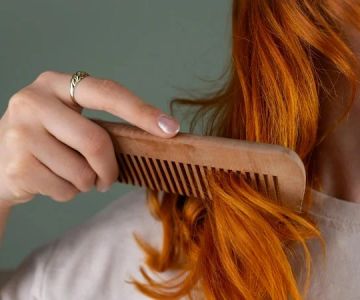
Wet hair can be vulnerable to mechanical damage. Blot or wrap it with a soft towel or T-shirt instead of rubbing vigorously. Use fingers or a wide-tooth comb, beginning at the ends and moving upward in small sections. Hold the section above a knot so the scalp does not bear the pull.
Timing depends on texture. Dermatologists advise letting straight hair dry somewhat before gentle combing, while tightly curled or textured hair is often best detangled while damp and conditioned. Avoid repeated brushing for the sake of a stroke count. If a knot will not release, add slip and divide the section rather than yanking.
Protect colored and light hair
Lightened, blond, gray, and chemically treated hair can be more vulnerable to sun and pool-related changes. Chlorine interacting with copper in water can contribute to a green cast; adding more bleach or an improvised chemical correction can worsen damage. Ask a color professional for a strand assessment and a compatible clarifying plan.
If a pool-heavy trip is planned, discuss color timing with the salon beforehand. Use shade or a wide-brimmed hat outside the water, and avoid stacking bleaching, intense sun, frequent swimming, and high heat in the same period. A swim cap, prompt rinse, conditioner, and lower heat are practical layers of protection.
Watch the scalp
Mild temporary dryness is different from persistent burning, swelling, blisters, weeping skin, tender bumps, or a spreading rash. Rinse promptly and stop the suspected product or exposure. Seek medical advice for severe symptoms, eye involvement, breathing difficulty, infection signs, or a reaction that does not settle.
Do not scratch with nails or use concentrated acids, bleach, or household chemicals on the scalp. People with eczema, psoriasis, allergies, recent procedures, or prescribed scalp treatments should ask their clinician how swimming and post-swim products fit their plan.
Build a repeat-swimmer routine
Frequent swimmers benefit from a small kit: cap, wide-tooth comb, soft towel, gentle cleanser, conditioner, and a bag that separates wet items. Note swim frequency, water type, product use, tangling, breakage, and scalp comfort for several weeks. Adjust one variable at a time so you can identify what helps.
Schedule trims based on your style and actual end damage, not a universal interval. Alternate protective styles without repeating tension at the same points. Clean tools, wash the cap, and let everything dry before repacking. A salon can help tailor shape and product use; a dermatologist should evaluate scalp disease or unexplained hair loss.
Swim hair-care checklist
- Wet hair with clean water before swimming.
- Use a compatible barrier product if desired and allowed.
- Fit a swim cap without painful tension or sharp pins.
- Rinse promptly with fresh water after swimming.
- Cleanse the scalp as needed and condition for your texture.
- Blot gently and detangle from ends upward.
- Reduce added bleach, high heat, tight styles, and rough handling.
- Seek help for persistent scalp or breakage concerns.
Limitations
This guide cannot diagnose hair loss, dermatitis, infection, allergy, or chemical injury. Pool chemistry, open-water conditions, hair structure, treatments, and medical history differ. A product that works for one swimmer may irritate or weigh down another. Follow pool rules and product labels, and obtain individualized advice from a licensed stylist or board-certified dermatologist when needed.
Frequently asked questions
Does a swim cap keep hair completely dry?
Usually not. It reduces exposure and controls hair, but water can enter around the edges. Pre-wetting and post-swim rinsing still matter.
Should I shampoo after every swim?
Rinse after every swim. Cleansing frequency and product strength should match exposure, scalp oil, hair texture, and professional advice.
Why did light hair turn green?
Copper in pool water can interact with chlorine and deposit on hair. Avoid DIY bleaching; ask a color professional about safe residue removal.
Can I brush wet hair?
It depends on texture. Straight hair often benefits from partial drying first; tightly curled or textured hair may be easier to detangle while damp with conditioner. In either case, be gentle.
Sources and evidence notes
This article draws on the American Academy of Dermatology's swim-season hair guidance, healthy hair tips, and damage-reduction recommendations. The sources support caps, prompt rinsing, conditioning, gentle drying, texture-aware detangling, and limiting heat. Accessed August 10, 2026.
Conclusion
Swim hair care works best as a sequence: prepare, reduce exposure, rinse promptly, restore moisture, and handle wet strands gently. Match the details to your texture and treatments, and treat ongoing scalp symptoms or unusual breakage as a reason for professional evaluation.




 Manely Cuts&Blowouts5.0 (39 reviews)
 Dream Cuts 974.0 (40 reviews)
 principle barbers4.0 (74 reviews)
 X-Pert Cuts4.0 (37 reviews)
 Bana & Rocky Hair Salon4.0 (146 reviews)
 MARIAM AFRICAN HAIR BRAIDING3.0 (24 reviews)
 Best Hair Color for Pale Skin Tones That Brighten Your Look
 How to Prepare Your Hair for Rainy Season After Visiting a Local Hair Salon
 How to Use a Hair Store Near Me for Cross-Training Your Haircare Routine Based on Season
 The Best Haircut Trends Near Me for Teenagers in 2025
 The Best Men’s Haircuts Near Me for Professionals: Sharp, Low-Maintenance Styles
 How to Get Rid of Oily Hair Without Washing It Every Day