
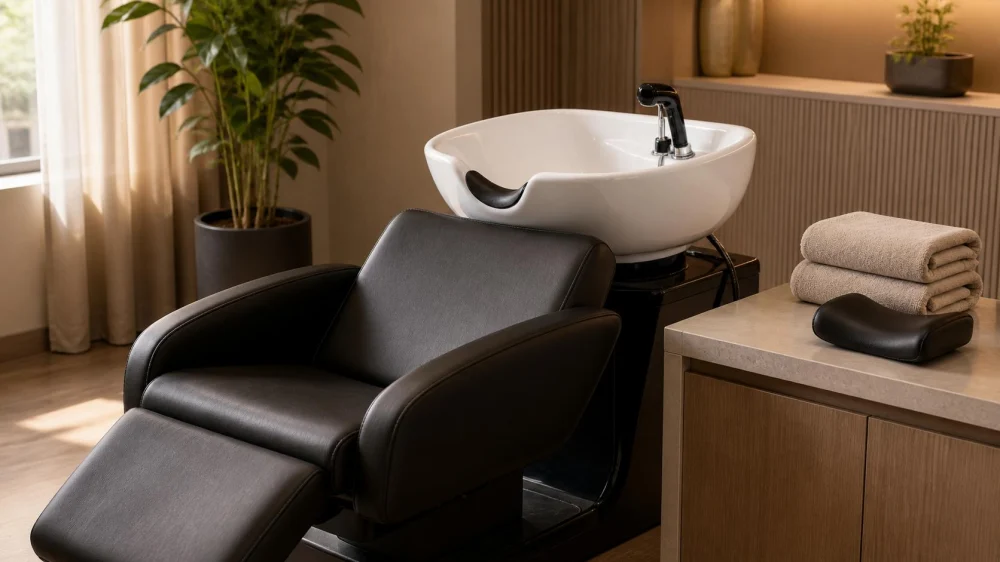
Salon Shampoo Bowl Comfort: Neck Support and Stop Signals
On this page
Quick answer
Before reclining at a salon shampoo bowl, tell the stylist about neck, back, shoulder, mobility, dizziness, skin, or recent procedure concerns that affect positioning. Adjust the chair, basin support, towel, and water temperature before the wash starts, and agree on a clear stop signal. Speak up immediately about pain, numbness, tingling, dizziness, pressure, water entering the ears or face, or a position you cannot leave safely.

Why wash-station fit matters
A shampoo station combines a chair, basin edge, head position, neck support, water, products, towels, time, and repeated stylist movements. A setup that fits one client may create pressure, extension, dizziness, or difficulty rising for another. Small adjustments made before wetting the hair are easier than enduring discomfort during a service.
This guide supports communication during salon shampoo services in the United States. It does not diagnose neck pain, clear a person after surgery or injury, prescribe positioning, or certify equipment. Clients with medical, neurologic, vascular, mobility, pregnancy, skin, or recent procedure concerns should use individualized clinician guidance.
Comfort details to discuss before reclining
- Current neck, back, shoulder, jaw, headache, dizziness, balance, mobility, swallowing, skin, ear, or scalp concerns and relevant clinician restrictions.
- Recent surgery, injection, injury, dental or cosmetic procedure, implanted device, pregnancy, or another change that may affect reclining or products.
- Chair height and stability, foot support, route to the station, transfer needs, basin position, neck rest, towel placement, and ability to return upright.
- Water temperature and pressure, spray direction, ear and face protection, service duration, pauses, and whether the stylist can shampoo in another position.
- Shampoo, conditioner, treatment, fragrance, color residue, latex or other materials, allergies, sensitivities, and contact with broken or irritated skin.
- A spoken or hand stop signal, how the stylist will respond, and what assistance the client wants before moving or standing.
- Alternatives such as a more upright wash, handheld approach, dry service, shorter sections, another station, or rescheduling after clinical advice.
Set up and use the bowl step by step
- Discuss relevant comfort, mobility, medical, product, and communication needs before moving to the wash station.
- Walk the route, inspect the chair and basin, place personal items safely, and arrange assistance according to the client's preference.
- Adjust chair, foot support, basin, towel, and approved neck support while the hair is dry, then test the position briefly.
- Agree on a stop signal and confirm the client can use it, communicate, and return upright without unexpected movement.
- Test water on an appropriate area, direct the spray away from face and ears, and begin only after temperature and pressure are accepted.
- Pause at the first sign of pain, numbness, tingling, dizziness, nausea, pressure, water leakage, breathing concern, or loss of secure support.
- Bring the client upright gradually with agreed assistance, reassess before standing, and record useful setup details for the next appointment.
For future visits, note the station used, chair and basin adjustments, neck support and towel placement, body position, water temperature and pressure, products, duration, pauses, stop signal, assistance, symptoms, alternative that worked, and any salon or clinician follow-up. Update the note when health or mobility changes.
Medical, mobility, product, and equipment limits
A towel or cushion is not a medical device and should not be stacked in a way that destabilizes the head or blocks breathing. Do not force the neck against a fixed bowl, continue through neurologic symptoms, lift a client without consent and training, or improvise around equipment limits. A salon cannot determine whether a position is medically safe after a procedure, injury, or condition.
Stop the service and return upright safely for pain, numbness, tingling, weakness, dizziness, nausea, visual change, severe headache, breathing or swallowing difficulty, faintness, or distress. Seek urgent medical help for sudden one-sided weakness, facial droop, speech trouble, severe sudden headache, loss of consciousness, chest pain, severe breathing trouble, or another emergency. Contact the treating clinician before rescheduling when medical restrictions are unclear.
Frequently asked questions
Should the bowl edge press into my neck?
The setup should support the service without painful or increasing pressure. Ask for adjustment or another method before continuing.
Can the stylist add extra towels?
A towel may improve comfort when the station allows it, but it must not create instability, unsafe neck position, blocked breathing, or water leakage.
What if I become dizzy when reclining?
Use the stop signal immediately, return upright with safe assistance, and do not continue until the situation is assessed.
Can I request a more upright shampoo?
Yes. Ask what stations or methods the salon can safely provide and whether your hair service can be adapted.
When should I ask my clinician first?
Seek individualized guidance after recent surgery or injury or when a medical, neurologic, vascular, mobility, or pregnancy concern may affect positioning.
Sources and evidence
Use the salon's equipment and product instructions, stylist training, and accessibility procedures for the service setup. Use an appropriate licensed clinician for medical restrictions, new neurologic or vascular symptoms, recovery after procedures, and whether a position is suitable. Product manufacturers provide ingredient, allergy, contact-time, and rinse directions for the exact items used.
Conclusion and next steps
Share relevant needs before reclining, test the dry setup, and agree on a stop signal. Adjust early instead of waiting for discomfort to build, and move upright gradually before standing. If the station cannot fit safely, choose another method or postpone for clinical guidance. A good shampoo should support the service without asking the client to trade comfort or warning signs for clean hair.



 Justin Hawkins Barber @ Rockstar Barbershop4.0 (15 reviews)
 Henry'S BARBER SHOP4.0 (10 reviews)
 Next Level Salon5.0 (12 reviews)
 A-List Xperience0.0 (0 reviews)
 Amelia Rose Studio4.0 (3 reviews)
 Eva’s hair cut #25.0 (7 reviews)
 How to Choose a Hair Store Near Me That Truly Understands Your Hair Needs
 The Best Hair Store Near Me for Affordable Options That Still Suit Professional Looks
 The Truth About Hair Loss Searches & What Your Stylist Wishes You Knew
 How to Style Long Hair Without Heat Tools for a Natural Look Guide
 How to Shop at a Hair Store Near Me for Tools That Suit Travel and Weekend Trips
 The Hidden Costs of a Haircut at a Hair Salon Near Me (And How to Avoid Them)