
Hair Reference Photos: Show Shape, Texture, and Limits
Table of contents
Quick answer
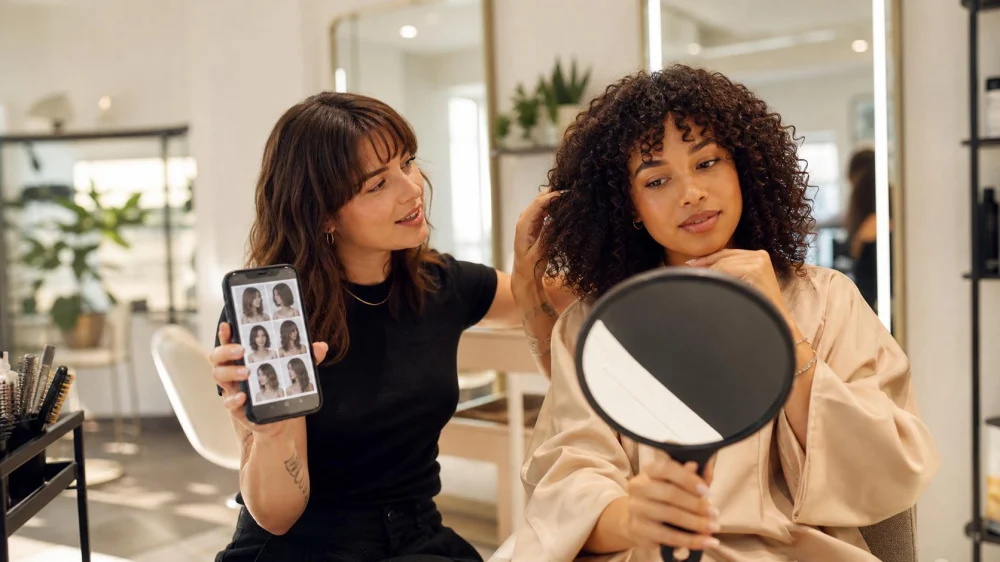
Bring three to five photos that show the front, side, back, length, layers, fringe, and finish you like. Mark one feature in each image instead of asking for an exact copy. Include photos of your own hair on typical days and examples you do not want. Tell the stylist about texture, density, growth patterns, prior chemical services, routine, budget, and maintenance time.
Choose useful images
A strong reference set shows a clear haircut or style from more than one angle. Choose images with similar hair texture, density, and starting length when possible. A heavily edited front-facing portrait may hide the back, layers, extensions, and styling work.
Use several views of the same look if available. A side image can reveal perimeter and face framing; a back image shows shape and density; a close view helps with fringe and parting. Include at least one image in ordinary light rather than only studio or filtered content.
Limit the collection. Twenty unrelated looks can make the goal less clear. Rank them: primary direction, useful detail, and alternative. Tell the stylist which one matters most.
Save images to the device in advance so weak salon service or deleted posts do not interrupt the consultation. Respect copyright and privacy; use publicly shared inspiration for discussion rather than claiming another stylist's work as your own.
Separate the elements
A photo combines cut, color, styling, lighting, hair pieces, pose, and editing. Point to the element you want: blunt perimeter, airy fringe, crown volume, curl definition, warm tone, or polished finish. “I like this” is less useful than “I like the length just below the collarbone and the soft face frame.”
Ask the stylist to distinguish what comes from the cut and what requires daily styling. Waves may be created with hot tools; volume may depend on a blowout; smoothness may come from products or chemical services. A haircut alone may not reproduce the photograph after air-drying.
Color appearance changes with light, screen settings, camera processing, and surrounding tones. Use photos to describe direction, not to demand a guaranteed identical result. The stylist can compare swatches and explain how the target interacts with your current base and hair history.
Mark what you do not want. A photo of a length you dislike, a heavy fringe, or a highly stacked back can prevent misunderstandings. Keep the negative example distinct from the desired images.
Show your own hair
Arrive with hair prepared according to salon instructions. If the stylist needs to see natural texture or curl pattern, ask whether to avoid heat styling, tight ponytails, heavy product, or freshly washed hair. Do not guess.
Bring recent photos of your hair worn naturally, styled by you, pulled back, and on a difficult day. These show shrinkage, cowlicks, parting, density, and the amount of effort you usually apply. Include an image of the last cut when it was at its best.
Give a complete service history: permanent and demi-permanent color, bleach, henna, smoothing, relaxer, perm, extensions, and home products. Even if a treatment is no longer visible, it may remain on the hair length. Accurate history supports safer planning.
Mention scalp sensitivity, allergies, prior reactions, breakage, and current medical or hair-loss concerns. The stylist is not a clinician. Active scalp symptoms, sudden shedding, sores, or a prior significant reaction may require medical advice or a postponed chemical service.
Discuss limits and maintenance
Ask what can be achieved in one visit and what requires stages. Starting color, condition, length, density, curl pattern, and previous chemistry affect the result. A responsible plan may prioritize hair integrity over an immediate dramatic change.
Describe your real routine: minutes available, tools owned, wash frequency, climate, exercise, headwear, and willingness to use products. Ask the stylist to demonstrate the simplest repeatable method and name the type, not only the brand, of each tool or product.
Confirm maintenance frequency and cost. Fringe trims, root color, toner, extension movement, and highly shaped cuts can require more appointments. Ask how the look grows out and what the lower-maintenance alternative would be.
For chemical services, discuss product, skin or strand tests, ventilation, warnings, and stop signals. FDA advises consumers to follow product directions and cautions for hair dyes. Do not pressure a salon to skip a required test or exceed processing directions to match a photo.
Confirm the plan
Before work begins, ask the stylist to summarize the agreed length, shape, fringe, part, color direction, finish, and services. Use a physical reference point on your body for length, recognizing that wet, stretched, curled, and styled hair sit differently.
Confirm the price range, time, included finish, extra treatments, and what could change the quote. Ask what happens if a strand test changes the plan. For a major cut, agree on whether length will be removed in stages.
During the service, speak early if the sectioning, length, tension, heat, or comfort differs from what you understood. Use a stop signal for pain, burning, breathing irritation, or another concerning symptom. Do not wait until the final mirror for a fixable communication issue.
At the finish, view the front, sides, and back in ordinary light. Ask the stylist to show the movement and home routine. Photograph the result with permission and record the formula or service notes if the salon provides them.
Limitations
A reference image cannot guarantee an identical result. Hair biology, condition, previous services, light, tools, editing, and maintenance differ. The stylist must evaluate the actual hair.
This is general salon communication guidance, not medical or chemical-service advice. Follow product labels, salon protocols, and qualified health guidance for reactions or scalp concerns.
Sources and evidence
FDA's salon and hair-product resources explain that cosmetic product safety information and label directions matter, especially for dyes and smoothing services. They support giving the salon accurate history, following warnings, and not treating an inspiration photo as permission to bypass product directions.
- FDA fact sheet for salon professionals and clients
- FDA hair-products resources
- FDA hair-dye safety Q&A
Frequently asked questions
How many reference photos should I bring?
Three to five focused images are usually easier to discuss than a large mixed collection. Rank them and identify the useful feature in each.
Should the model have my hair texture?
Similar texture and density make the reference more informative, but the stylist still needs to evaluate your hair and styling routine.
Can a stylist copy a haircut exactly?
No exact result can be promised because hair, head shape, growth patterns, styling, and photography differ. Use the image to define direction.
Should I bring a photo of what I dislike?
Yes, one or two clearly labeled negative examples can clarify boundaries. Keep them separate from the desired look.
Do I need to disclose old color?
Yes. Chemical history can remain on the hair length and affect safety and results even when the roots are natural.
What if the stylist says the photo is not achievable?
Ask which factors limit it, what staged or modified version is realistic, and what maintenance it requires. Choose the plan you understand.
Conclusion
Reference photos work when they start a precise conversation. Bring a small ranked set, isolate the feature you like, show your own hair, and disclose service history and routine. Ask what comes from cut, color, and styling, then confirm price, maintenance, and limits. The goal is a shared plan suited to your actual hair—not a literal copy of a screen.
 Ritual Hair Loft5.0 (70 reviews)
 HairMeOutMariah0.0 (0 reviews)
 V-La Salon5.0 (25 reviews)
 SelfmadeExtentions5.0 (1 reviews)
 Kaelyss5.0 (6 reviews)
 Sam Tanbour5.0 (38 reviews)
 How to Use Your Haircut as a Confidence Booster Before a Big Presentation
 How to Use Social Proof (Reviews, Instagram) to Pick a Hair Store Near Me That Delivers
 What to Know About Booking a Haircut Near Me During Holiday Rush
 Best Hair Color Ideas for Summer Glow Up Look That Transform Your Style
 How to Evaluate Your Upcoming Hair Salon Visit Like a Pro: Checklist Inside
 How to Manage Curly Hair When You Can’t Find a Specialist in Your Area