
Curly or Textured Haircut Prep: Confirm the Salon's Cutting Method First
On this page
Quick answer
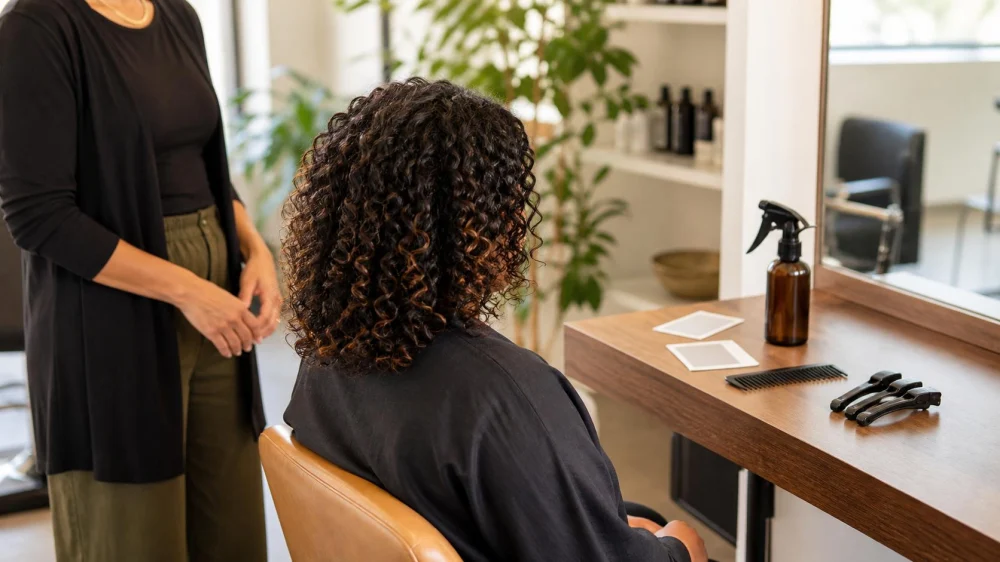
Before a curly, coily, wavy, or otherwise textured haircut, ask the salon exactly how the stylist plans to assess and cut the hair. Some methods begin dry in the client's usual pattern; others begin washed, conditioned, detangled, damp, or stretched. Confirm whether to arrive with product, clips, braids, twists, heat-stretched hair, or none of these.
Show how the hair normally looks and explain shrinkage, density, tangling, previous chemical or heat services, scalp sensitivities, and how much styling time you want at home.
Ask whether the cut is dry, damp, or wet
A dry curl-by-curl approach can show the visible shape and variation in shrinkage. A wet or damp cut can provide controlled sectioning and tension. A stylist may combine methods. None is universally best; it must fit the hair, goal, stylist's training, and desired finish.
- Will shape be assessed before shampooing?
- Will the cut use the natural pattern or stretched sections?
- How will symmetry be judged when curls shrink differently?
- Is a dry refinement included after styling?
- What happens if the arrival condition does not match the method?
Confirm the arrival condition
Ask for written preparation instructions. “Clean and dry” can mean different things: freshly washed, fully dry, worn loose, detangled, free of heavy product, or styled as usual. Do not guess and then aggressively brush or heat-style hair to comply.
If the salon needs to see the natural pattern, avoid hats, tight bands, braids, twists, buns, or clips that temporarily reshape it unless the stylist requests them.

Describe shape, shrinkage, and routine
Use reference photos that show similar density and texture, but also show your own hair on a typical good day, wash day, and several days later. Point to the shortest acceptable visible length after shrinkage. Discuss part placement, volume, face-framing, perimeter, bangs, layering, and whether you wear the hair stretched or straight at times.
- Name the top two shape priorities.
- State the length boundary in the hair's usual dry state.
- Describe wash and styling frequency.
- List the tools and products you actually use.
- Ask how the cut will grow out.
Plan detangling without unnecessary breakage
Detangling needs vary. American Academy of Dermatology guidance notes that tightly curled or textured hair may be safer to comb or brush when wet and conditioned, while wet hair can be fragile for other hair types. Ask when, where, and with what tool detangling will happen.
Request sections, conditioner or slip, a wide-tooth comb or fingers when appropriate, and a stop if pulling causes pain. Do not conceal severe matting; tell the salon in advance so it can allocate time or recommend another service.
Set handling and heat limits
Discuss scalp tenderness, recent breakage, thinning, extensions, relaxers, color, keratin services, medications affecting the scalp, and any clinician instructions. Agree on acceptable dryer and tool heat, tension, brushing, and product fragrance.
Say immediately if you feel burning, sharp pulling, scalp pain, dizziness, neck strain, or another concerning symptom. Stop chemical or heat exposure when advised and seek medical help when appropriate.
Understand finishing and evaluation
The final shape can depend on product, drying method, humidity, and manipulation. Ask whether finishing is included, what products will be used, and whether you can see the cut before extra volume or stretching changes it.
Review front, sides, back, part options, and movement in ordinary light. Ask for a simple home routine and the salon's adjustment policy before leaving.
Important limitations
This is general U.S. salon-planning guidance, not dermatology or individualized hair-care advice. Texture, scalp health, service methods, and stylist training vary. See a board-certified dermatologist for persistent pain, sores, sudden shedding, patchy loss, or other health concerns.
Evidence notes
AAD guidance emphasizes gentle handling, texture-specific detangling, minimizing pulling, and protecting hair from excessive heat. The salon checklist adds method, arrival state, shrinkage, routine, and evaluation so client and stylist make those choices explicitly.
FAQ
Should I arrive with my hair styled?
Only as the salon requests; some stylists need the usual pattern, while others need clean, detangled hair with little product.
Is a dry cut always better for curls?
No. Dry, wet, damp, stretched, and combined methods have different purposes.
Should I straighten my hair first?
Not unless the stylist specifically requests it and it fits your goals and hair condition.
How do I prevent a shorter-than-expected result?
Show the minimum dry visible length and discuss shrinkage before cutting begins.
What if detangling hurts?
Ask the stylist to stop and change the method; pain is useful information.
Next steps
Message the salon for its exact preparation instructions, gather photos of your own hair in several states, and write down length, shape, routine, and handling limits. Repeat the agreed method before the cut begins.


 Don Vic and Neil Barbershop4.0 (124 reviews)
 Perfect Cut by Abraham4.0 (108 reviews)
 Artsy Barber | Chicago Barbershop + Art Gallery5.0 (106 reviews)
 Symmetric Hair Cuts5.0 (4 reviews)
 Braids&Weaves/ Braids on Sedgwick4.0 (10 reviews)
 So Eve’s Hair Studio4.0 (28 reviews)
 How to Choose the Right Hairstylist Based on Your Hair Type
 Best Tips for Maintaining Vibrant Hair Color Longer Without Fading
 Best Hair Color Ideas for Summer Glow Up Look That Transform Your Style
 How to Select the Right Shampoo from a Hair Store Near Me Based on Your Water Hardness
 Best Hairstyles for Men with Long Hair That Are Practical
 Celebrity-Inspired Haircuts That Are Surprisingly Easy to Achieve at Local Salons