
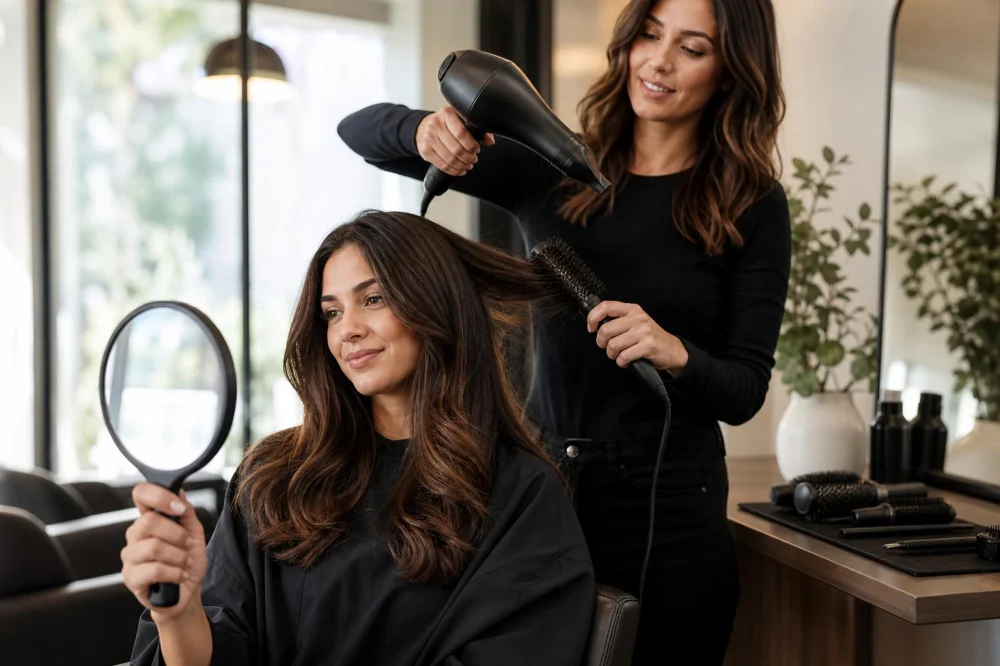
How to Prepare for a Salon Blowout Appointment
In this guide
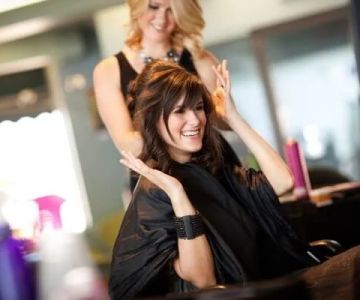
A salon blowout is a wash-and-style service that uses airflow, brushes, products, and sometimes finishing tools to create a chosen shape. Preparation is usually simple, but policies vary: one salon may include shampoo and conditioning, while another may offer a dry-style option or charge extra for extensions, dense hair, or hot-tool finishing. A short call before the appointment prevents most surprises.
Quick answer
Confirm whether shampoo, conditioning, and hot-tool finishing are included, then follow the salon's instructions about arriving with clean, dry, or unwashed hair. Tell the stylist about extensions, recent chemical services, breakage, scalp sensitivity, allergies, and fragrance preferences. Bring one or two realistic reference photos, explain how long the style needs to last, and say how much volume, smoothness, curl, or movement you want. Wear a top that will not disturb the finished style when removed.
Confirm what the service includes
“Blowout” does not mean exactly the same thing at every salon. Ask whether the appointment includes shampoo, conditioner, scalp massage, detangling, round-brush styling, flat-iron or curling-iron finishing, and a final product. Confirm the expected duration and price, especially if your hair is very long or dense.
Disclose extensions, wigs, toppers, bonded pieces, tape-ins, beads, or sewn tracks when booking. The salon may need a stylist trained for that system, more time, gentler heat, or different tools. Ask whether there is an extension surcharge and whether the service includes drying the attachment areas completely.
If you only want a dry restyle, say so explicitly. A dry blowout cannot remove oil, sweat, buildup, smoke odor, or allergens the way cleansing can, and it may produce a different result.
Ask how your hair should arrive
Do not assume you should wash immediately before the appointment. If shampoo is included, many salons prefer hair in its ordinary condition so the stylist can cleanse and condition it for the planned finish. If the service is dry styling, the salon may request clean, fully dry, detangled hair with little or no heavy product.
Avoid trying a new oil, mask, protein treatment, clarifying shampoo, color product, or chemical service just before the visit. These can alter slip, moisture, color, or strength and make the hair respond differently. If you used a strong product or medication on the scalp, tell the stylist.
Remove tight elastics, clips, braids, or buns early enough to reduce dents if the salon asked you to arrive dry. Do not force through tangles or mats; notify the salon because safe detangling may require additional time or a separate service.
Share relevant hair and scalp information
A brief hair history helps the stylist choose temperature, tension, products, and tools. Mention recent bleach, permanent color, relaxer, perm, keratin or smoothing treatment, chlorine exposure, unusual shedding, breakage, and previous heat damage. Point out fragile areas around the hairline, crown, or ends.
Tell the salon in advance about a tender scalp, eczema, psoriasis, allergies, fragrance sensitivity, migraines triggered by scent, or products you must avoid. Bring an ingredient list or your own approved product only after asking whether the salon permits it.
Open sores, active infection, lice, unexplained drainage, or severe irritation may require postponement and medical advice. A blowout is cosmetic styling, not treatment for a scalp disorder.
Describe the finish you want
Use specific visual terms. Explain whether you want smooth and straight, soft bends, loose waves, polished curls, root lift, a rounded shape, flipped ends, or a natural-texture stretch. Say where you want volume and where you do not. “No volume” at the crown and “smooth but not flat” communicate different outcomes.
Reference photos work best when the model has a similar length, density, texture, and haircut. Show the stylist what you like in the photo: the root height, curl size, part, fringe, or degree of movement. A blowout can temporarily change finish and shape, but it cannot create layers, density, or length that the haircut does not provide.
Discuss your usual part and any cowlicks before the hair is dried. If you want to switch the part, ask whether the growth pattern will support it and how to recreate it at home.
Discuss heat and product preferences
Heat should be selected for the hair's condition and the desired result, not automatically set to the highest level. The American Academy of Dermatology advises limiting excessive heat and using lower heat settings to reduce damage. Previously bleached, brittle, fine, or breaking hair may need a more conservative plan, fewer finishing passes, or a different style goal.
Ask what heat protectant, smoothing product, volumizer, mousse, cream, oil, or hairspray will be used. More product is not always better: heavy formulas can flatten fine hair, while insufficient hold may not support a long event. Mention if you dislike a stiff finish, strong fragrance, silicone, aerosol, or visible shine.
Speak up immediately if the dryer air feels painfully hot, the brush pulls sharply, the scalp burns, or a tool touches skin. Styling may involve tension and warmth, but it should not require enduring pain.
Plan around an event and the weather
Tell the salon if the blowout is for a wedding, interview, photographs, performance, travel day, or another timed event. Build in a buffer for consultation, dense hair, parking, and any requested adjustment. Avoid scheduling so tightly that a normal delay makes you late.
Humidity, rain, wind, sweating, hats, and long travel can change a blowout. Ask for a realistic weather plan rather than a guarantee. The stylist may suggest a different finish, lighter or stronger hold, anti-humidity product, pinning curls to cool, or carrying a small touch-up item.
For a first visit before an important occasion, consider a trial on an ordinary day. It shows how the style photographs, feels, and lasts on your hair without relying on a new technique at the last moment.
What happens during the appointment
If cleansing is included, the stylist will usually assess the hair, shampoo and condition it, gently remove excess water, apply chosen products, section the hair, and dry it with controlled airflow and brush tension. Hair should be fully dry before the final shape is judged; remaining dampness can cause the style to collapse or revert quickly.
Many stylists work from lower sections toward the crown, directing the nozzle down the hair shaft while shaping each section. They may allow a section to cool around a brush or clip because cooling helps set its temporary form. A curling iron or flat iron may be used only if included and appropriate.
Before leaving, look at the back and sides, move your head, and check whether pins, clips, or product feel uncomfortable. Ask for a small adjustment then rather than trying to rebuild the style later.
Help the blowout last comfortably
Let the hair cool fully and avoid repeatedly running hands through it. Protect it from rain, steam, and heavy sweating when practical, but do not sacrifice comfort or health to preserve a style. In humid weather, perfection may not be realistic.
At night, the stylist may recommend a loose high ponytail, soft wrap, large rollers, pin curls, braid, or silk or satin pillowcase depending on the finish. A method that preserves straight hair may distort curls, so ask for instructions specific to your result. Avoid tight elastics that leave dents or pull the hairline.
Use dry shampoo only as directed and stop if it irritates the scalp. Layering powders, sprays, and oils can cause buildup. When the scalp or hair needs cleansing, wash it rather than extending the blowout indefinitely.
Know the limits of a blowout
A blowout is temporary. Longevity varies with texture, scalp oil, exercise, sleep, products, climate, and exposure to water. It cannot permanently straighten hair, repair split ends, reverse chemical damage, or treat hair loss. Claims of permanent repair from a styling service deserve caution.
Repeated high heat, aggressive brushing, and tight tension can contribute to breakage. If the hair is severely compromised, a stylist may recommend lower heat, a simpler finish, trimming, or postponement. Persistent shedding, bald patches, pain, or scalp disease should be evaluated by an appropriate health professional.
Frequently asked questions
Should I arrive with dirty hair?
No universal rule applies. Ask the salon. If shampoo is included, ordinary unwashed hair is often acceptable; if you have heavy buildup, an active scalp concern, or a dry-style booking, the salon may give different instructions.
Can I get a blowout with extensions?
Often yes, but disclose the extension type when booking. The stylist must protect attachment points and may need additional time, specialized tools, or approval from the extension provider.
How long will a blowout last?
There is no guaranteed number of days. Hair texture, oil, moisture, weather, activity, sleep, and the chosen finish all matter. Ask for a realistic estimate for your hair and plans.
Do I need a reference photo?
It is helpful but not required. One or two relevant images plus a clear description of volume, smoothness, curl, part, and event needs usually communicates more than a large inspiration folder.
Can a blowout fix damaged hair?
It can temporarily make hair look smoother, but it does not reverse structural damage or permanently mend split ends. A conservative styling plan may reduce additional stress.
A good blowout starts with clear expectations
The most useful preparation is communication: verify what is included, follow arrival instructions, share hair and scalp history, choose a realistic visual goal, and state heat or product limits. Plan enough time, wear an easy-to-remove top, and ask for aftercare that fits the actual finish. A thoughtful consultation helps the stylist create a polished result without treating every head of hair the same way.
 Hair Mechanic4.0 (55 reviews)
 The Perfect Hair Studio- Hair By Monica5.0 (13 reviews)
 George’s Classic Barbershop5.0 (25 reviews)
 Michaels Barber Chair5.0 (16 reviews)
 Luxe Color by Mimi5.0 (17 reviews)
 HG Studio5.0 (20 reviews)
 How to Choose the Right Haircut for Fluffy or Porous Hair That Needs Extra Care
 How to Create Loose Waves Without Heat for Beginners
 Best Hairstyles for Humid Weather That Stay Frizz Free
 The Best Hair Store Near Me for Bargain Bundles That Still Use Professional-Quality Brands
 The Best Haircut Trends Near Me for Autumn 2025 You Can Still Book This Month
 How to Turn a Basic Haircut Into a Signature Look with the Right Styling Tools