
Dry Cut or Wet Cut? How to Discuss the Method With a Stylist
In this guide
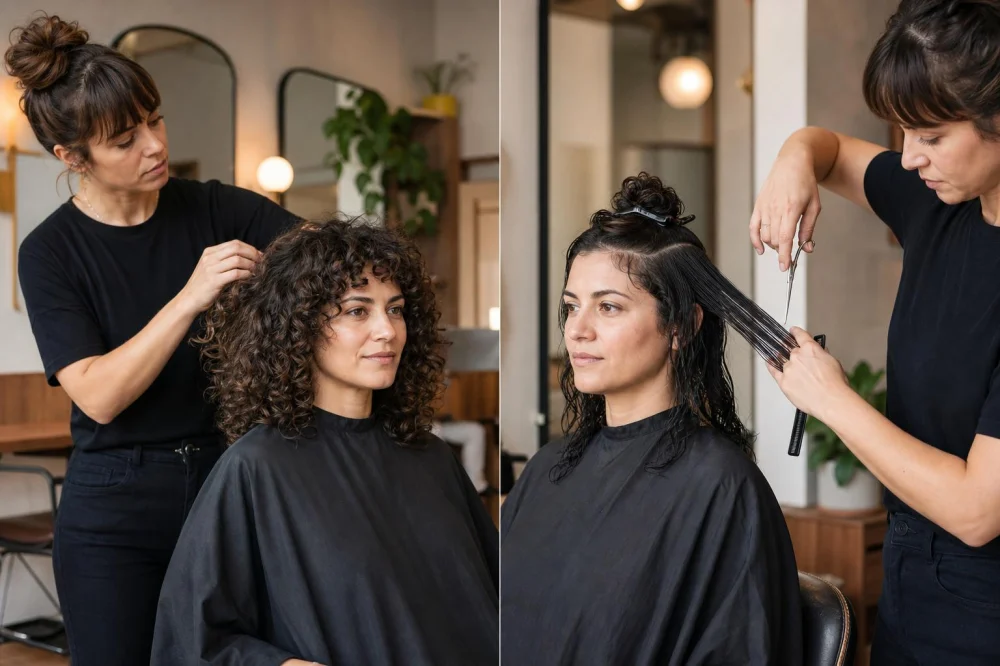
Some salons promote dry cutting as the best way to see natural texture, while traditional training often begins with wet, controlled sections. In practice, skilled stylists use wet, damp, dry, or combined methods to solve different shape and texture problems. A client does not need to dictate every technical step, but should understand why the stylist chose a method, how the hair should arrive, and how the finished length will relate to the way the hair naturally dries.
Hair Fusion Bar - Best Hair Extensions
409 W Huron St #100, Chicago, IL 60654, USA
Quick answer
A wet cut can make hair easier to section, control, and compare for a clean structural shape. A dry cut lets the stylist observe natural fall, curl, shrinkage, cowlicks, density, and the silhouette as worn. Many stylists establish shape wet and refine balance dry, or cut textured hair dry before washing and finishing. The best method depends on hair condition, texture, desired shape, normal styling routine, and the stylist's training. Ask how to arrive and what part of the service will be evaluated in its natural dry state.
One method is not universally better
“Dry cut” and “wet cut” describe hair condition during cutting, not a guarantee of quality. A careful wet haircut can account for texture and shrinkage, while a poorly planned dry cut can still be uneven. The result depends on consultation, sectioning, tension, elevation, tool control, understanding of the client's hair, and evaluation after styling.
Technique is also more nuanced than the labels imply. Hair may be saturated, towel-damp, misted section by section, air-dried, diffused, stretched, blown smooth, or returned to its natural pattern. Ask what the salon means when it markets a named cutting service.
What a wet cut can reveal
Water groups strands together and adds weight, which can make sectioning and guide lines easier to see. A stylist can establish perimeter, graduation, layering, and symmetry with consistent control. Wet cutting is common for precise geometric shapes, significant length removal, and hair that will be styled in a controlled way.
Wet hair does not show its final behavior by itself. Curl can stretch, waves can appear straighter, cowlicks may lie differently, and fine or sparse areas may look denser when strands are grouped. The stylist must anticipate shrinkage, spring, and movement, then check the result after drying.
Hair is more vulnerable to stretching and breakage when wet, especially if damaged. Gentle detangling, suitable tools, and controlled tension matter. A client should disclose recent bleach, chemical services, breakage, extensions, or scalp discomfort before shampooing and cutting.
What a dry cut can reveal
Dry hair shows how gravity, texture, density, growth direction, styling products, and previous cutting interact. The stylist can see where individual curls sit, how a fringe separates, where waves expand, and whether the silhouette looks heavy or hollow. Dry cutting can be useful for curl-by-curl shaping, visual balancing, fringe adjustment, and refining a completed blow-dry.
“Dry” should not mean heavily coated, tangled, stretched in an unrepresentative style, or altered by days of clips and ponytails unless the stylist requests that state. Product buildup can group strands and hide natural movement. A dry-cut specialist may ask clients to arrive with clean, fully dry hair worn naturally and free from heavy product, braids, buns, or elastic dents.
Cutting individual curls without understanding how they group after washing can also create surprises. Ask whether the service includes cleansing, restyling, and a final balance check.
Why stylists combine methods
A combined service uses each condition for what it shows best. The stylist might remove bulk and set a perimeter wet, blow-dry or diffuse, then refine the outline and internal balance dry. For textured hair, the first shape may be cut dry, followed by cleansing and a second look after curls reform.
Combination does not mean indecision. It can be a deliberate quality-control process. The important question is whether the stylist sees the hair in the state the client will actually wear and understands how the cut behaves after the first home wash.
Texture, curl, density, and growth patterns
Two people with a similar curl label can need different cutting plans. Curl diameter, elasticity, porosity, density, strand width, damage, shrinkage, scalp distribution, and styling routine all influence the shape. Some heads contain straight, wavy, and curly areas together.
Show the stylist where the hair springs most, where it collapses, and how it behaves at the crown, temples, hairline, nape, and fringe. Mention whether you diffuse, air-dry, wrap, straighten, use protective styles, or alternate among them. A cut optimized for maximum natural shrinkage may look different when blown smooth.
Growth patterns such as whorls and cowlicks are easier to see dry. Very dense hair may need internal weight management, while fine low-density hair can look thin if over-texturized. The cutting method should support the intended outline, not apply one rule to every texture.
Match the cut to how you wear your hair
Tell the stylist what percentage of the time you wear hair natural, diffused, blown out, straightened, tied back, or under protective styles. If versatility matters, say which looks are essential. A strongly curl-specific shape may transform when straightened; a precision wet shape may need dry refinement for an air-dried wave.
Bring a few photos of your own hair on good and difficult days, not only inspiration images from other people. Show the shortest length you are comfortable seeing after shrinkage. Identify styling steps you will actually repeat at home.
How to arrive for the appointment
Follow the salon's instructions because preparation depends on the method. For a natural-pattern dry cut, the salon may request clean, fully dry, detangled hair with minimal product and no stretched styles. For a conventional wash-and-cut, arriving with ordinary hair is often fine because cleansing is part of the service.
Do not perform an unfamiliar clarifying, protein, smoothing, or chemical treatment immediately before the appointment unless advised. It can temporarily change how hair feels and behaves. Remove extensions only if the stylist requests it, and disclose adhesives, beads, sewn tracks, wigs, toppers, and scalp appliances.
Tell the salon before arrival about open sores, active infection, severe irritation, lice, or a medical condition that affects the service. Rescheduling or medical guidance may be appropriate.
Questions for the consultation
- Do you plan to cut wet, dry, or both, and why for my hair?
- How should I arrive so you can see my natural pattern?
- Will you check the cut after it dries in my usual style?
- How will you account for shrinkage and mixed textures?
- What is the shortest point after drying?
- Will this shape also work when I blow-dry or straighten?
- What home styling is needed to reproduce the finish?
- Does the service include shampoo, styling, and refinement?
A clear explanation should connect technique to the result, not insult other methods. Be cautious of absolute promises that one named cut is ideal for every person with a broad hair category.
Set expectations about length and finish
Wet length and dry length can differ substantially. Agree on the target in the state that matters—usually the finished dry style. Point to a body landmark rather than saying “take off two inches” if shrinkage and elevation complicate measurement. Ask the stylist to show the first section before a major change.
A salon blowout can make a cut look smooth and polished while disguising how it air-dries. If air-drying matters, ask for a finish that demonstrates that behavior or schedule enough time for a natural-pattern assessment. Take notes on products and technique without assuming the exact salon finish will persist through every humidity level and home routine.
When to pause the service
Pause before cutting if the stylist has not discussed shrinkage, begins changing the agreed method without explanation, uses tension that feels painful, or proposes thinning or razoring damaged hair without addressing your concern. Speak up if the planned shortest point changes.
Stop immediately for burning, sharp pain, scalp injury, or a tool problem. Cutting should not require enduring pain. If the hair is severely matted, breaking, chemically compromised, or attached to extensions the stylist is not prepared to service, a different appointment or specialist may be safer.
Frequently asked questions
Is dry cutting only for curly hair?
No. Dry cutting can refine straight, wavy, curly, and coily hair, especially fringe, perimeter, balance, and movement. The specific technique varies.
Does wet cutting cause more split ends?
Split ends are influenced by hair condition, tool sharpness, tension, heat, chemicals, and daily care. Hair being wet does not by itself make a professional cut harmful.
Can a dry haircut include shampooing?
Yes. Some stylists cut the initial shape dry, then cleanse, style, and refine. Ask what the booked service includes.
Should I straighten curly hair before a dry cut?
Only if the stylist specifically requests it for the intended result. A curl-focused dry cut usually needs to see the natural pattern, not a temporary straightened state.
Which method gives the most even haircut?
Evenness depends on the intended shape and how the hair is worn. Precision guides may be easier wet, while visual balance may be clearer dry. Many stylists verify both.
Choose the stylist and plan, not a slogan
Wet cutting offers control; dry cutting reveals lived texture; combined cutting can deliver both structure and visual refinement. The right choice comes from the desired shape, hair condition, natural pattern, styling habits, and the stylist's proven skill. Ask how to arrive, why the method fits, where the dry length will land, and whether the result will be checked in the way you actually wear it.
 Hair Mechanic4.0 (55 reviews)
 The Perfect Hair Studio- Hair By Monica5.0 (13 reviews)
 George’s Classic Barbershop5.0 (25 reviews)
 Michaels Barber Chair5.0 (16 reviews)
 Luxe Color by Mimi5.0 (17 reviews)
 HG Studio5.0 (20 reviews)
 How to Choose the Right Haircut for Fluffy or Porous Hair That Needs Extra Care
 How to Create Loose Waves Without Heat for Beginners
 Best Hairstyles for Humid Weather That Stay Frizz Free
 The Best Hair Store Near Me for Bargain Bundles That Still Use Professional-Quality Brands
 The Best Haircut Trends Near Me for Autumn 2025 You Can Still Book This Month
 How to Turn a Basic Haircut Into a Signature Look with the Right Styling Tools