
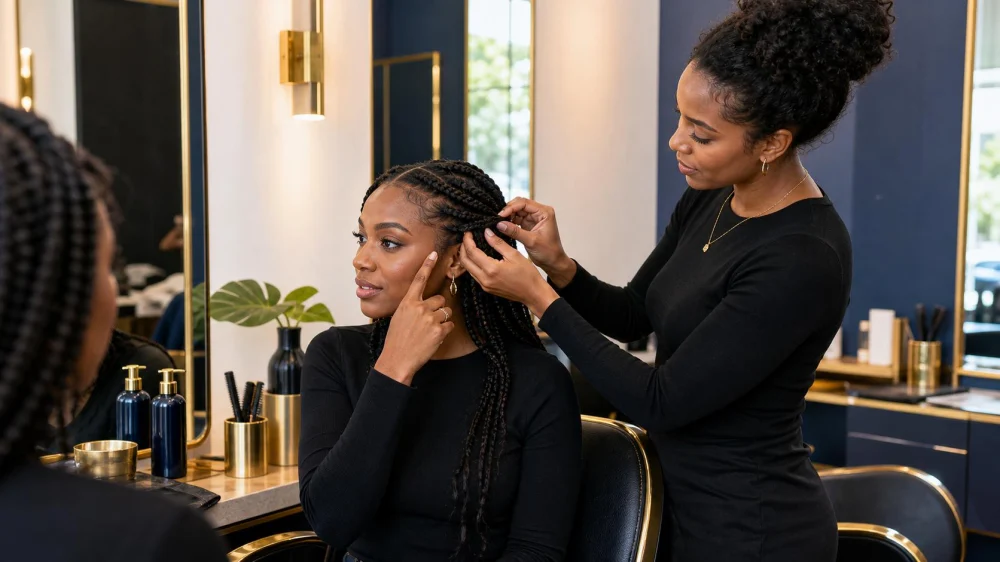
Braids or Extensions Feel Too Tight: Speak Up and Loosen
A finished style should not require enduring scalp pain. Braids, cornrows, ponytails, locs, weaves, and extensions can express personal style, but repeated pulling may break hair and contribute to traction alopecia. Tell the stylist immediately about pain, stinging, headache, tenting, or excessive tension, and change the style rather than waiting for the scalp to “get used to it.”
Quick answer
If a style hurts, ask the stylist to stop and loosen or remove the affected section. Check the hairline, part lines, nape, and areas beneath attachments for pulling, bumps, crusting, or broken hairs. Avoid adding weight, heat, or strong-hold products to a stressed scalp. Remove a painful or irritating weave or extension promptly and seek a board-certified dermatologist for hair loss, persistent symptoms, or shiny bare areas.

Plan before the appointment
Share your hair texture, scalp sensitivity, recent chemical services, breakage, hair loss, and previous reactions. Show the stylist areas that are tender or thin. Ask how the base will be formed, where attachments will sit, how much hair will be added, expected wear time, maintenance, and removal.
Arrive with hair and scalp prepared according to the stylist’s instructions, not scratched or irritated. Postpone a tension style when there are open sores, active rash, swelling, crusting, unexplained hair loss, or a recent procedure until an appropriate clinician advises.

Check tension during styling
Agree on a simple signal for stopping. Report pinching, burning, stinging, headache, eye or brow pulling, scalp tenting, or pain with facial movement as soon as it begins. A good stylist can reduce section tension, enlarge parts, change attachment placement, shorten the style, or choose another method.
Do not let embarrassment, appointment time, or the cost already incurred override pain. Numbing products can hide a warning and should not be used to tolerate excessive pulling. Take a mirror break to inspect the perimeter and ask questions.
Protect edges and fragile areas
The fine hairs around the forehead, temples, ears, and nape are easily stressed. Ask for looser sections at the perimeter and avoid capturing short baby hairs simply to create a sharper line. Do not repeatedly lay or pull edges with stiff products and tight ties.
Alternate part placement and style direction so the same follicles are not loaded continuously. If a head covering is worn, keep the style beneath it loose and choose a smooth lining when practical to reduce rubbing.
Limit weight and length
Longer or denser added hair creates more leverage and weight. Choose a length and fullness that the natural hair and base can support comfortably. Large decorative beads or accessories can add pull, especially during sleep and movement.
Thicker braids and shorter, lighter styles may reduce tension. Do not attach extensions to very small, weak, chemically treated, or already thinning sections. A stylist should reassess when the style shifts, sags, or concentrates weight.
Monitor after the service
During the first hours and throughout wear, check for pain, persistent tenderness, bumps, redness or discoloration, swelling, crusts, sores, broken hairs, or a receding edge. Photograph changes in consistent light for a dermatologist, but do not delay removal of a painful style to document it.
A mild awareness of a new arrangement is different from pain. The American Academy of Dermatology states that a painful hairstyle is too tight. Loosen or remove it instead of using pain relievers or waiting several days.
Clean and maintain gently
Follow a routine suited to the hair, scalp, and attachment method. Clean the scalp as needed with a gentle product, rinse thoroughly, and dry the base completely. Product buildup, trapped moisture, and scratching can worsen irritation.
Sleep in a way that avoids pulling at anchor points. Do not gather an already tight style into another tight ponytail or bun. Limit heat and harsh adhesives, and do not keep reinstalling tension styles without recovery time.
Remove without more pulling
Schedule enough time and use the correct removal method. Cut only added hair when its position is unmistakable, and never cut close to hidden natural hair. Detangle from ends upward with patience and appropriate slip.
Stop if attachments are matted, stuck, painful, or difficult to identify. A professional removal may protect more hair than forcing the process. Afterward, handle hair gently and inspect the scalp before choosing the next style.
Know when to see a dermatologist
Arrange a dermatology visit for broken hairs around the forehead, a receding hairline, patches where hair is pulled, persistent pain or rash, drainage, or unexplained shedding. Hair loss has many causes, so do not assume styling is the only explanation.
Early attention matters because prolonged traction can lead to permanent loss. Seek urgent medical care for facial swelling, trouble breathing, rapidly spreading rash, fever, or signs of severe infection or allergic reaction.
Frequently asked questions
Should new braids hurt for a day?
No. Pain is a warning to loosen or remove the style, not a normal requirement.
Can pain spray make a tight style safe?
No. Masking discomfort does not reduce the pulling force.
How long should braids stay in?
Wear time depends on the style and person; AAD guidance says braids or locs should not remain longer than six to eight weeks.
Will all hair loss grow back?
Not always. Ongoing traction can permanently damage follicles, so seek early evaluation.
Next steps
Before styling, agree on tension limits and removal timing. During the service, speak up at the first painful sensation. Afterward, inspect the perimeter and scalp, loosen immediately when needed, and schedule dermatology care for persistent symptoms or hair loss.
See American Academy of Dermatology guidance on hairstyles that pull.



 My Ambitious Beauty5.0 (5 reviews)
 Brows by Basia5.0 (46 reviews)
 Top Luxury Fades4.0 (72 reviews)
 Mario Novelli's Barber Salon4.0 (57 reviews)
 Beauti PRO4.0 (30 reviews)
 Cory Carr5.0 (2 reviews)
 The Biggest Hair Colour Mistakes People in the US Are Making in 2025
 Best Haircuts for Sensitive Scalps and Allergies: Tips and Recommendations
 How to Plan an Accessible Hair Salon Appointment
 How to Choose the Best Hair Stylist for Your Hair Type
 How to Use a Hair Store Near Me to Build a Minimalist Travel Hair Kit Under $100
 How to Choose the Right Haircut for Fluffy or Porous Hair That Needs Extra Care