
Pool Hair Care: Barrier, Cap, Rinse, and Recovery
On this page
Quick answer
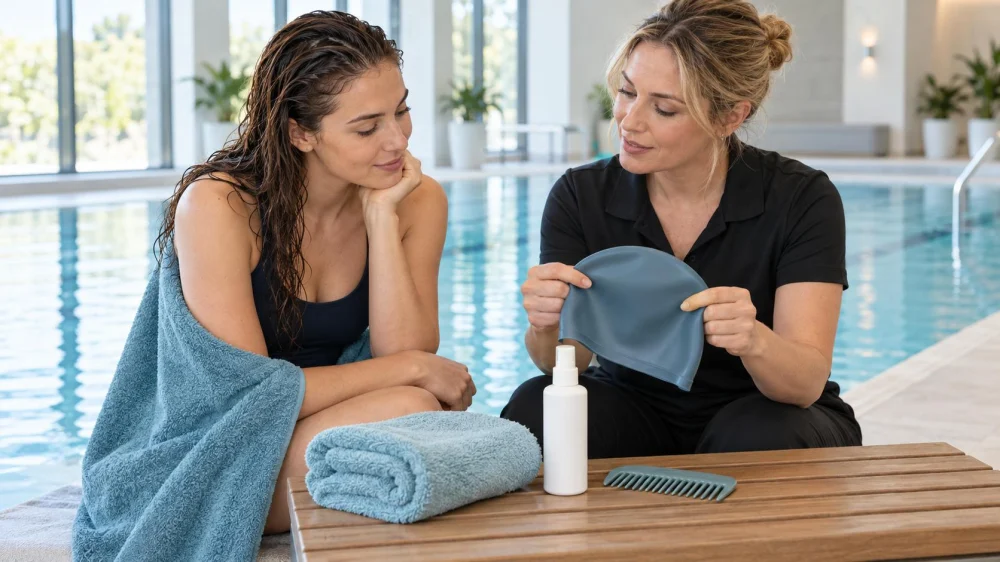
Before swimming, use a leave-in conditioner or hair oil suited to your hair to create a barrier, and consider a well-fitted swim cap. After the pool, rinse promptly, cleanse and condition as your hair needs, detangle gently from the ends, and limit extra heat. Color-treated, bleached, textured, fragile, or scalp-sensitive hair benefits from a plan tailored with a stylist or dermatologist.

Prepare before swimming
Brush or detangle gently before the pool so knots do not tighten while wet. Apply an oil or leave-in conditioner through the lengths according to the product directions, concentrating on dry or porous areas rather than loading the scalp.
The American Academy of Dermatology's summer hair-care guidance recommends oil or leave-in conditioner before entering a pool as a physical barrier between hair and chlorinated water.

Fit a cap without excess tension
A swim cap can reduce direct exposure and keep long hair controlled, but it does not keep every strand completely dry. Choose a size and material that does not pull the hairline, snag extensions, or create scalp pain.
Gather hair with a soft, low-tension method and tuck the ends gradually. Remove the cap slowly rather than stretching it across wet hair. Stop if the fit causes headache, breakage, or tenderness.
Rinse and cleanse after the pool
Rinse hair with clean water as soon as practical. Use a shampoo appropriate for your hair, scalp, color, and swim frequency. A clarifying or swimmer's shampoo may help some people, but frequent strong cleansing can leave dry or processed hair rough.
Follow the product label and stylist advice. Do not mix household chemicals, bleach, acids, or improvised treatments to remove chlorine or mineral discoloration.
Condition and detangle gently
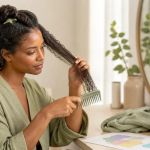
Apply conditioner to the areas that need slip, allow the directed contact time, and rinse. Blot with a soft towel instead of twisting or rubbing. Use a wide-tooth comb or suitable brush, starting at the ends and working upward in sections.
Air-dry when practical or use the lowest effective heat with a heat-protective product. Avoid stacking pool exposure, aggressive brushing, tight styles, and high heat on the same day.
Watch color, texture, and scalp response
Note increased roughness, tangling, breakage, fading, a green cast in light hair, scalp itching, or irritation. AAD notes that pool chlorine can interact with copper in water and contribute to a green hue in blond hair.
Ask a colorist about timing around coloring, bleaching, relaxing, perming, extensions, or keratin services. Contact a dermatologist for persistent scalp pain, rash, sores, swelling, or notable hair loss.
Important limits
No routine prevents all pool-related change, and individual hair reacts differently. Follow pool hygiene rules and product labels. Children, allergy-prone skin, scalp disease, and recent chemical or medical treatment may need individualized advice.
Frequently asked questions
Does a swim cap keep hair completely dry?
Usually not. It reduces exposure and controls hair, but water can enter around the edges.
Should I shampoo after every swim?
It depends on swim frequency, water chemistry, hair type, and scalp. Rinse promptly and choose cleansing frequency with a stylist or dermatologist if dryness develops.
Can I use a clarifying shampoo every day?
That may be too drying for some hair. Follow the product directions and balance residue removal with conditioning and color needs.
Why can blond hair look green?
Copper in pool water can interact with chlorine and deposit on porous light hair. A stylist can recommend a safe removal plan.
Sources and evidence notes
This routine uses American Academy of Dermatology summer hair-care guidance on pre-pool barriers, UV and pool stress, and chlorine-copper discoloration. Product and salon instructions remain specific to the individual.
Next steps
Pack a suitable barrier product, comfortable cap, gentle cleanser, conditioner, and detangling tool. Rinse promptly after the pool, record changes, and adjust the routine before dryness or breakage compounds.

 Frank's Barbershop5.0 (21 reviews)
 NWÄR STUDIOS, INC.4.0 (144 reviews)
 HG Studio5.0 (20 reviews)
 Rock Hair Scissors4.0 (229 reviews)
 Matisse4.0 (258 reviews)
 IJ CUTS BARBER SHOP4.0 (92 reviews)
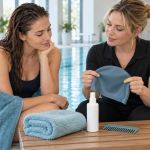 Pool Hair Care: Barrier, Cap, Rinse, and Recovery
 Scalp Sun Protection: Part Lines, Hats, and Reapplication
 Hair Salon Intake Call: Define Scope Before the Appointment
 Hair Salon Completion Review: Test the Result Before Sign-Off
 Hair Detangling Plan: Sections, Slip, and Gentle Progress
 Salon Consultation Notes: Goals, Maintenance, and Limits